
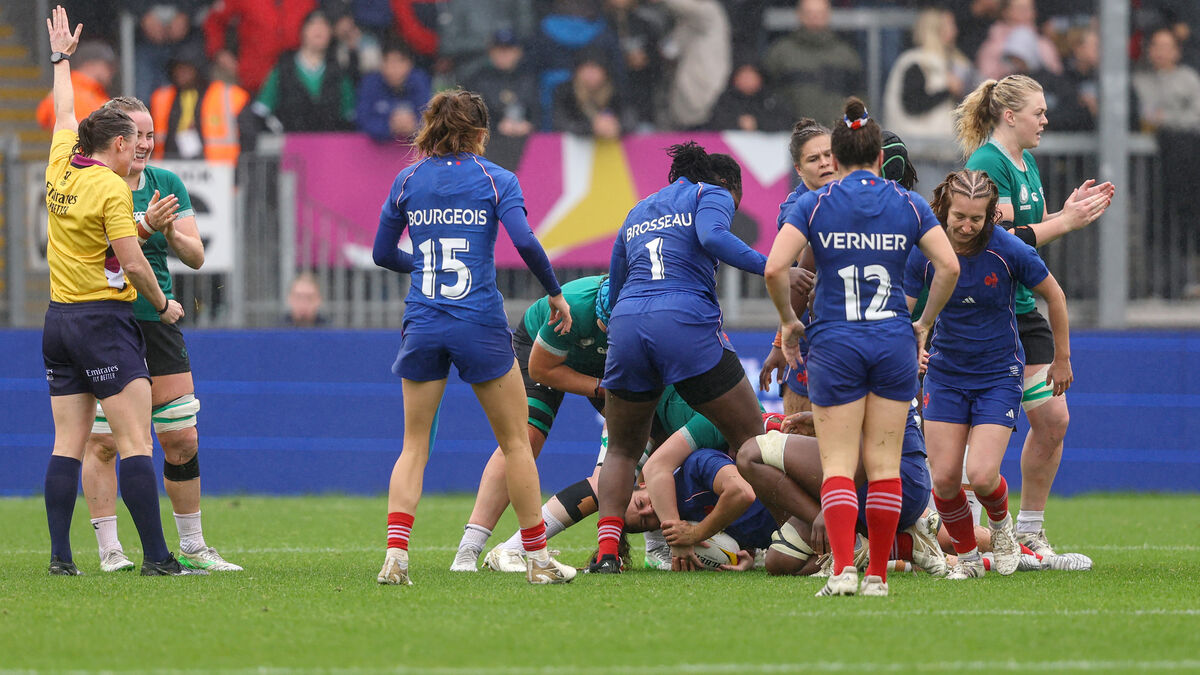

France’s Axelle Berthoumieu has been handed a 12-match suspension after being found guilty of biting Ireland’s Aoife Wafer during a game at the 2025 Women’s Rugby World Cup. The decision, announced by tournament officials, immediately sparked debate across the rugby community, as it represents one of the most severe penalties in recent editions of the competition.
The altercation took place during a tightly contested match between France and Ireland, where both sides fought to secure their positions in the group stage. In a moment of close contact, cameras and match officials caught Berthoumieu engaging in conduct deemed unacceptable by international rugby standards. Following the incident, Wafer required medical attention, though she was able to continue playing, showing remarkable resilience and composure. The disciplinary committee reviewed footage, statements, and referee reports before reaching its conclusion, which was then shared publicly to ensure transparency.
The seriousness of the penalty and its consequences
The 12-match ban imposed on Berthoumieu is not only a personal setback for the French player but also a blow to her national team, which now loses an experienced member at a critical stage of the tournament. Rugby authorities emphasized that the decision was guided by existing frameworks designed to uphold safety, integrity, and fair play. World Rugby regulations treat biting as a serious offense, carrying sanctions that can range from mid-level suspensions to lengthy bans, depending on the gravity of the act and its consequences.
For France, the lack of Berthoumieu requires them to adjust their strategic approach and consider other alternatives to compensate for the absence. Experts have noted that this kind of event can impact the team’s spirit, as it not only reduces the team’s strength but also prompts discussions on discipline and maintaining composure during stressful moments. Conversely, Ireland’s Wafer has been commended for her professional approach to the situation, steering clear of any escalation and keeping her attention on the game.
Response from the rugby world
Different opinions have emerged in response to the sanction; however, the majority of involved parties concur that the penalty was justified. Supporters, analysts, and ex-players have shown worry that events like this might harm the image of women’s rugby as the sport is drawing more spectators. Numerous people have praised the firm decision of the disciplinary committee, considering it a clear statement that hazardous behavior will not be accepted.
Social media has amplified the discussion, with supporters of both nations debating the fairness of the punishment. While some argue that the 12-match suspension is excessively harsh, others believe it is proportionate and serves as a deterrent for future cases. Former international players have weighed in, reminding current athletes of their responsibility to set an example, especially given the visibility of a World Cup. The consensus among rugby officials is that discipline must remain uncompromising in order to preserve the spirit of the game.
The wider perspective on discipline in women’s rugby
This situation contributes to the ongoing discussion about discipline and safety in women’s rugby. As the game intensifies and becomes more physical, prioritizing player safety has become essential for regulatory organizations. Offenses like biting, high tackles, and unsafe entries into the ruck are under close scrutiny, with tighter enforcement aiming to reduce hazards and promote respect among athletes.
The Women’s Rugby World Cup has emerged as a display not only of outstanding athletic skill but also of the principles inherent in rugby: respect, integrity, and togetherness. Authorities are eager to emphasize these ideals, employing notable incidents such as Berthoumieu’s to highlight the significance of discipline. The aim is that strong measures will operate as a learning resource for athletes across all tiers, from local clubs to the elite level.
An unexpected turning point
For Axelle Berthoumieu, the suspension represents a turning point in her career. Missing 12 matches in the context of international rugby is a considerable setback, both in terms of playing time and reputation. Whether she can rebuild her image will depend on her response to this sanction and her future conduct. For France, the immediate focus will be adapting their strategies to compensate for her absence, while also addressing questions about discipline within the team.
Ireland, meanwhile, continues its campaign with Wafer gaining recognition not only as a skilled athlete but also as a symbol of resilience. The incident has elevated her profile and drawn attention to her ability to maintain professionalism in challenging circumstances.
The disciplinary decision reflects a broader determination to safeguard rugby’s integrity as the sport continues to grow. By imposing strong sanctions on misconduct, officials aim to protect players, uphold the values of the game, and send a clear message to both participants and fans: respect and fair play remain non-negotiable, even on the biggest stage of all.


