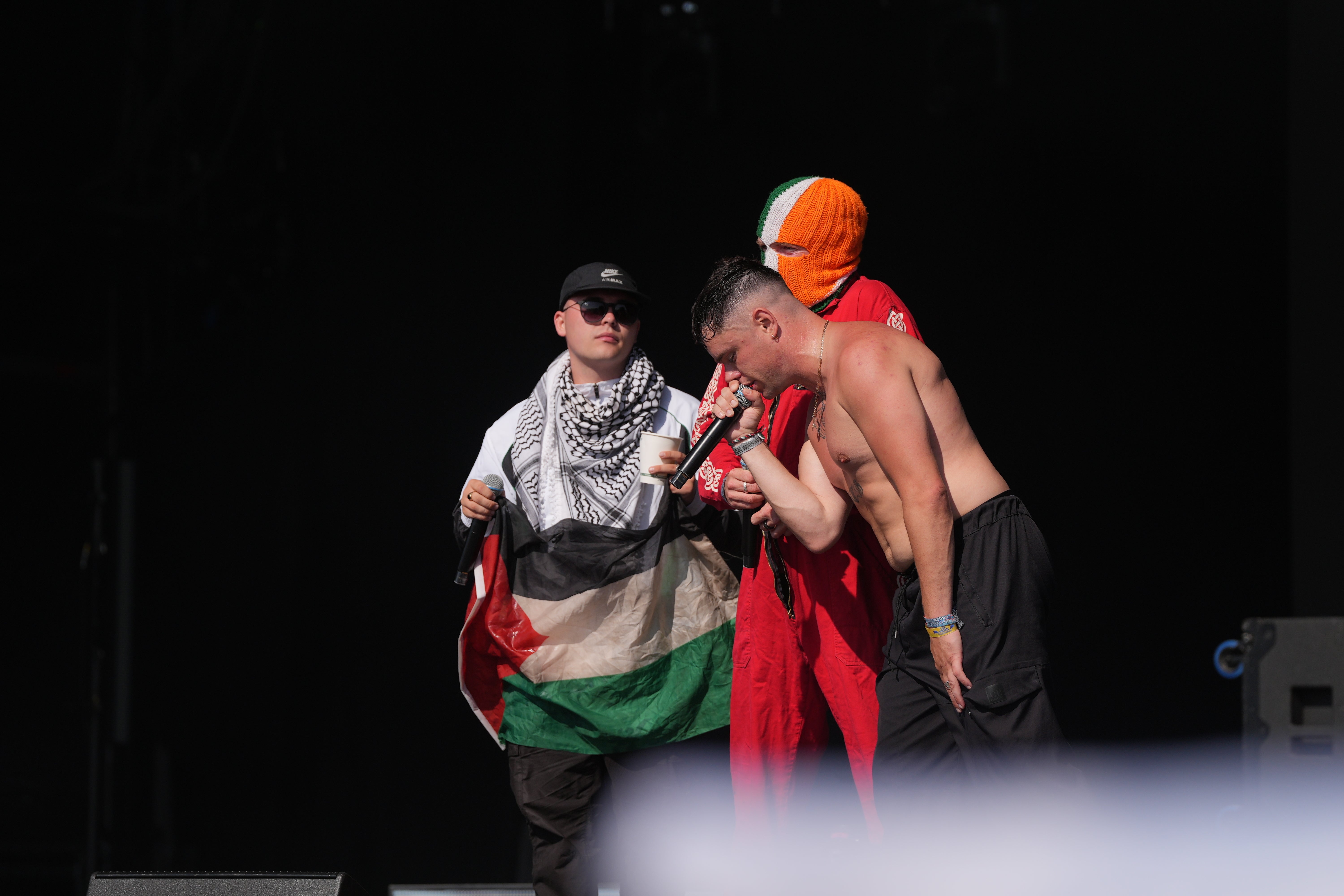

Police have officially ended their inquiry into Kneecap’s recent performance at the Glastonbury Festival, concluding that no further action will be taken. The investigation, which drew attention both from fans and political observers, had been launched following concerns raised over elements of the group’s set, including perceived political symbolism and alleged breaches of public order standards.
Kneecap, a Belfast-based hip-hop group known for their outspoken views and provocative stage presence, had sparked controversy with their appearance on one of the festival’s prominent stages. During their set, they incorporated imagery and language that some critics interpreted as politically charged, prompting public debate and an eventual response from law enforcement.
The band frequently explores subjects connected to Irish identity, historical struggles, and social defiance through their music, and they have never avoided controversy. By incorporating satire, lyrics in the Irish language, and references with political undertones, they have gained both devoted fans and substantial criticism. For Kneecap, their shows go beyond mere musical performance—they serve as cultural expressions and frequently as political commentary.
Following their Glastonbury appearance, several complaints were reportedly made to authorities, prompting a preliminary investigation into whether the group had violated any laws during their performance. Speculation swirled online and in the press about potential charges, with some voices calling the show inflammatory, while others defended it as a legitimate expression of free speech and artistic freedom.
However, upon analyzing the footage, testimonies, and pertinent context, law enforcement has concluded that the act was not a violation of the law. A department representative stated that the case is now closed, with no charges laid and no further investigations anticipated.
This resolution has been met with mixed reactions. Supporters of the group have welcomed the decision, arguing that any attempt to censor or criminalize performance art based on its political content would set a dangerous precedent. In their view, Kneecap’s artistry reflects long-standing issues of identity, marginalization, and dissent, particularly within the Irish and Northern Irish context.
Critics, on the other hand, remain uneasy about the influence of politically provocative acts on large public stages, especially in high-profile settings like Glastonbury, which attracts hundreds of thousands of attendees and global media coverage. For them, the concern lies not in the legality of such performances but in their potential to provoke division or misunderstandings.
Kneecap, in turn, reacted to the inquiry and its result with their typical irreverent style. Through a concise message posted online, they seemed unfazed by the examination, implying that their show was not meant to incite. Instead, it was aimed at questioning dominant stories through their artistry and humor. They emphasized that their creations are based on genuine experiences and cultural analysis, rather than seeking to provoke without purpose.
The episode raises broader questions about the intersection of art, politics, and public platforms. In a time when musicians and performers are increasingly using their visibility to engage with political themes, the boundaries of acceptable expression remain fluid and contested. Events like Glastonbury, which historically have provided space for activism and counterculture, are at the forefront of these debates.
Legal specialists highlight that the safeguards for free speech differ based on the jurisdiction and situation. In the UK, the location of the festival, the law allows for political discourse in art, provided it does not provoke violence or animosity. Judging if an act goes beyond these boundaries can be very subjective and often demands detailed legal and cultural analysis.
The event’s coordinators have not yet provided specific remarks on this topic, but they have consistently asserted that Glastonbury supports a wide array of voices and artistic liberty. Featuring performances such as Kneecap aligns with the festival’s tradition of showcasing musicians who challenge norms and address societal concerns.
As the dust settles, Kneecap’s performance—and the reaction it provoked—serves as a reminder of the power of music to stir conversation and test societal norms. For some, that power is essential to democracy and cultural vitality. For others, it can appear confrontational or unsettling, especially when tied to historical or political tensions.
The closure of the police investigation may bring an official end to the matter, but the broader conversation about the role of politically charged performance in public spaces is far from over. Whether one views Kneecap’s Glastonbury set as provocative art or problematic messaging, it undeniably captured attention—and in doing so, highlighted the enduring connection between music, identity, and political voice.
As artists continue to navigate the evolving boundaries of expression, cases like this one illustrate how public reaction, legal frameworks, and cultural context all intersect to shape what is considered acceptable or controversial. In the case of Kneecap, the conversation may have begun on stage—but it now echoes far beyond the festival grounds.