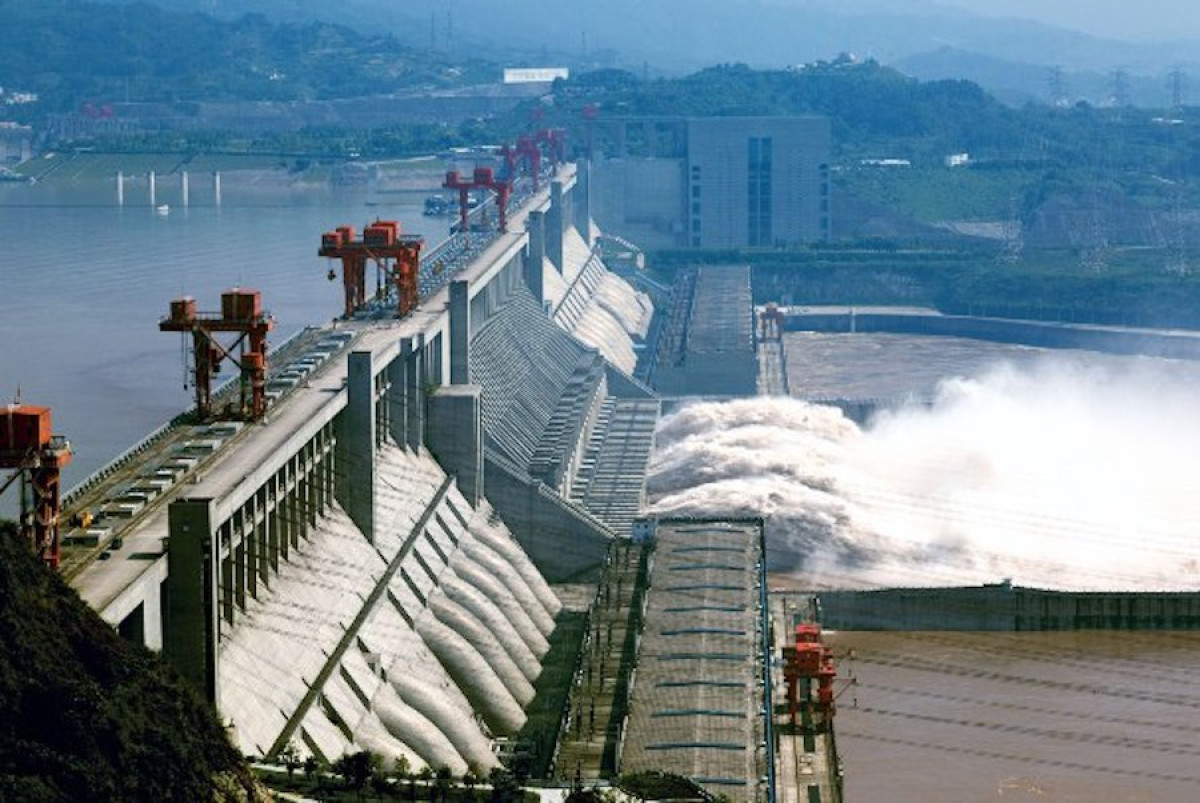

China has initiated the construction of what is expected to become the world’s largest hydroelectric dam, a monumental infrastructure project located near its southwestern border. While the development represents a significant milestone in China’s renewable energy ambitions, it has sparked growing apprehension in neighboring India, particularly due to the dam’s location on a river that flows into the Indian subcontinent.
The new dam is being built on the Yarlung Tsangpo River in Tibet, which becomes the Brahmaputra once it crosses into India. As one of the major rivers supporting agriculture, livelihoods, and biodiversity in northeastern India and Bangladesh, any large-scale development on its upper reaches carries geopolitical and environmental weight.
From China’s viewpoint, the initiative corresponds with national aims to increase its renewable energy capability and lessen its dependence on coal. The nation has advanced considerably in hydropower, solar, and wind energy over recent years, and this new plant aims to enhance electricity output to aid economic advancement and regional progress. It is reported that the dam might produce more electricity than the present global leader, the Three Gorges Dam, also situated in China.
Nonetheless, the size and strategic position of this newly constructed dam have triggered concerns in India. Specialists and decision-makers are apprehensive about its potential effects on water security, especially in the downstream Indian state of Arunachal Pradesh. There is anxiety that China might exploit its upstream location to control water distribution, impacting irrigation, potable water supplies, and hydropower initiatives in India. In times of heightened tensions between the countries, water might serve as a tool for political leverage.
These concerns are not new. In the past, India has expressed unease over Chinese dam-building activities in the Himalayas, especially when information sharing and transparency are limited. While China maintains that its projects are run according to international standards and are not intended to harm downstream countries, India has pushed for more robust data-sharing agreements and environmental impact assessments.
Conservation advocates also caution that constructing a dam on the Yarlung Tsangpo might result in significant environmental impacts. The river’s passage through deep canyons and isolated ecosystems makes it one of the planet’s most diverse regions biologically and geologically. Modifying its path or water level could interfere with sediment movement, water-based organisms, and the delicate ecosystems reliant on the river’s natural flow.
Furthermore, the region is prone to seismic activity. The construction of a massive dam in such a location raises concerns about the potential impact of earthquakes on the structure’s safety. Past hydroelectric projects have demonstrated how natural disasters can compromise dam integrity, leading to widespread devastation.
For India, the timing of the project also touches on broader geopolitical dynamics. With tensions between the two nations still simmering over border disputes, particularly in the Himalayan region, the dam project adds another layer of complexity. Strategic experts in India view the development not just through the lens of resource management but also as a potential tool for regional influence.
In response, Indian authorities are assessing options to mitigate potential risks. These include enhancing domestic water management infrastructure, diversifying energy sources, and engaging in diplomatic talks aimed at securing transparent and cooperative river governance. India is also considering expanding its own hydropower projects in Arunachal Pradesh to strengthen its energy resilience and stake in the region.
Beyond bilateral issues, building the dam involves wider international challenges like cross-border water rights, climate adaptation, and sustainable development. As climate change continues to impact water supply and allocation, shared rivers such as the Brahmaputra will grow increasingly important—and disputed. It will be crucial to harmonize national priorities with regional collaboration to prevent conflicts and encourage shared benefits.
China, on its side, consistently underscores the economic and ecological benefits of the initiative. Authorities assert that hydropower provides a low-emission substitute for fossil fuels and aids in China’s broader objective of achieving carbon neutrality. They also emphasize the infrastructure advantages for local communities, encompassing employment, connectivity, and electrification in rural areas.
However, analysts emphasize that massive dam projects come with trade-offs. Internationally, there is ongoing discussion regarding the enduring effects of large-scale dams, especially concerning displacement, environmental harm, and the erosion of cultural heritage. For nations situated downstream, the absence of enforceable global agreements on river management may expose them to vulnerabilities from decisions made upstream without their participation.
El proyecto Yarlung Tsangpo es más que un logro de ingeniería, es también una prueba diplomática. A medida que avanzan los trabajos en la presa, la atención se centrará cada vez más en cómo China interactúa con sus vecinos y aborda sus preocupaciones legítimas. La transparencia, el intercambio de información y la cooperación serán fundamentales para generar confianza y reducir las tensiones.
In the coming years, the importance of this dam is expected to increase. Traditionally viewed as a renewable and communal resource, water is now transforming into a strategic asset in Asia. With China and India facing challenges like population expansion, climate shifts, and developmental demands, the key will be to manage their shared watercourses not as instruments of power, but as essential resources that demand careful management, cooperation, and mutual respect.
While the final structure may redefine records in energy production, its legacy will depend as much on diplomacy and environmental responsibility as on engineering achievement.