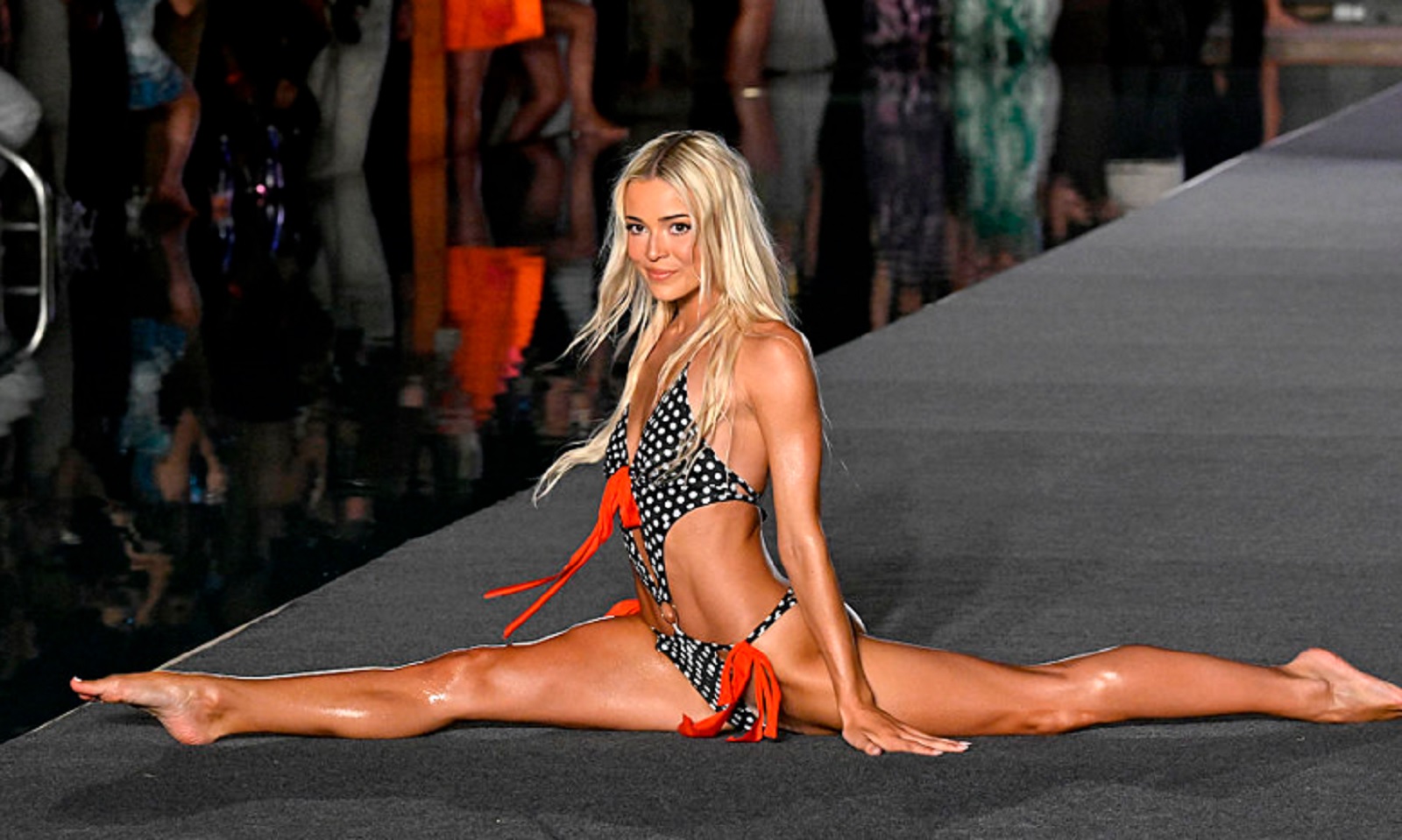

Olivia “Livvy” Dunne, a well-known gymnast and social media personality, recently expressed her dissatisfaction after being unable to buy an apartment that was once the residence of the legendary baseball figure Babe Ruth. This incident has captured public attention not just because of the historical importance of the property, but also due to Dunne’s increasing fame and her new venture into the real estate market.
Dunne, celebrated for her success in sports and her significant online audience, shared in an open interview that she had a strong interest in obtaining the apartment, which is significant in the realm of sports history. This property, linked to one of baseball’s legendary icons, represents both opulence and a rich legacy, appealing to collectors and admirers. Nevertheless, despite her eagerness and willingness to finalize the deal, Dunne stated she was “refused” the chance to acquire the esteemed residence.
The apartment in question, reportedly located in New York City, has long been linked to Babe Ruth, whose contributions to baseball remain legendary nearly a century after his prime. The idea of living in a space once inhabited by such an iconic sports figure resonated with Dunne, who herself has become a prominent figure in the world of athletics. The rejection, she said, was unexpected and disappointing, especially given her admiration for sports history and her genuine interest in the property’s legacy.
While the specific reasons for the denial have not been publicly disclosed, Dunne’s revelation has sparked speculation about the criteria and considerations involved in high-profile real estate transactions. In competitive markets like New York, luxury properties often come with stringent vetting processes, including background checks, financial assessments, and board approvals, especially within co-operative buildings or exclusive condominium communities. Even celebrities and public figures can find themselves navigating complex and sometimes opaque procedures when attempting to secure prestigious properties.
Dunne’s attempt to acquire the apartment reflects a broader trend of athletes and influencers investing in real estate as a way to diversify their portfolios and establish long-term financial security. With her growing success both in gymnastics and as a media personality, Dunne represents a new generation of sports figures leveraging their fame into entrepreneurial ventures, including property ownership. The story of her denied purchase serves as a reminder that celebrity status does not always guarantee access to historic or high-value real estate, where other factors often weigh heavily in decision-making processes.
Their open remarks about the situation have connected with admirers, several of whom have shown compassion and astonishment. For some individuals, the notion that even a well-known figure such as Dunne might encounter obstacles in real estate dealings emphasizes the exclusivity and intricacy of the high-end property sector. It also highlights the ongoing appeal of lands linked to historical personalities, where ownership might hold considerable cultural and sentimental importance.
Babe Ruth’s legacy looms large not only in sports but also in popular culture. Known as the “Sultan of Swat,” Ruth’s impact on baseball transformed the sport and captivated the American public during the early 20th century. Properties associated with him are considered prized pieces of Americana, blending architectural charm with historical significance. The idea of a modern sports star like Dunne seeking to inhabit such a space creates a fascinating narrative that bridges generations of athletic excellence.
Dunne’s own career trajectory has been remarkable. From her early days in gymnastics to her rise as one of the most followed collegiate athletes on social media, she has successfully combined sportsmanship with media savvy. Her influence extends beyond the gym, with endorsement deals, brand partnerships, and an ever-expanding public profile. For someone like Dunne, owning a residence with a link to Babe Ruth could have symbolized not only personal success but also a shared connection through sports history.
The incident also shines a light on the unique challenges public figures face when making high-profile purchases. While visibility and wealth can open many doors, they can also attract scrutiny and complicated vetting processes. Sellers or boards associated with historic or prestigious properties may have concerns about publicity, lifestyle compatibility, or community dynamics, all of which can influence decisions that go beyond financial capacity.
For Dunne, this experience could be a valuable lesson in her development as both an athlete and a businesswoman. Although she didn’t obtain the apartment, being candid about it has enriched her public image by showcasing traits like determination, authenticity, and strength. By expressing her disappointment, she has created a personal bond with her followers, demonstrating that challenges are universal, no matter one’s standing.
The widespread captivation with celebrity real estate sagas persists in drawing public interest, as admirers and watchers are fascinated by the blend of stardom, affluence, and renowned estates. Residences and flats with notable histories tend to catch the eye, not just because of their design elements but also due to the tales they encompass. Here, the combination of a promising young athlete and the residence of a sporting icon presented an engaging, though incomplete, narrative.
Although Dunne might have missed out on owning Babe Ruth’s previous apartment, her determination in the fields of athletics and commerce remains strong. Her skill in handling challenges, both publicly and privately, will probably benefit her as she advances her career and seeks new opportunities.
As the real estate market remains dynamic and competitive, stories like this highlight the human side of transactions that often seem driven solely by numbers and celebrity clout. They remind us that behind every property lies a web of history, emotion, and aspiration, and that sometimes, even the most determined buyers must face disappointment.
Dunne’s supporters keep following her advancing career with enthusiasm, motivated by her determination and openness in sharing her successes and obstacles. Her tale, though focused on a lost chance, mirrors the wider experience of numerous young achievers as they traverse the realms of celebrity, finance, and self-improvement.
As she progresses, the insights gained from this experience could significantly influence her upcoming projects, not only in real estate but also in other areas. Although Babe Ruth’s previous apartment is currently unattainable, Dunne’s prospects are bright and filled with opportunities, with numerous achievements ahead.