Our website use cookies to improve and personalize your experience and to display advertisements(if any). Our website may also include cookies from third parties like Google Adsense, Google Analytics, Youtube. By using the website, you consent to the use of cookies. We have updated our Privacy Policy. Please click on the button to check our Privacy Policy.

Blog

How do U.S. immigration pathways differ for students, workers, and families?

Understanding U.S. Immigration: Student, Worker, Family Visas

Immigration to the United States follows distinct procedural tracks depending on whether a person arrives as a student, a temporary worker, or a family member. The tracks differ in purpose, legal intent, eligibility rules, numerical limits, timelines, routes to permanent residence, and dependent benefits. Below is a clear comparison with examples, typical timelines, and practical implications.Students: objectives, limits, and common transitionsPrimary visas and intent: Most international students use the F-1 visa (academic) or M-1 visa (vocational). J-1 exchange visitors are common for some programs. These visas are fundamentally temporary and expect nonimmigrant intent, although students can later seek immigrant status…
Read More
How does American fashion vary between New York City, Los Angeles, and Austin, Texas?

NYC vs. LA vs. Austin: American Fashion Differences

American fashion is not monolithic; it is shaped by climate, industry, history, demographics, and local culture. New York City, Los Angeles, and Austin each project a distinct style logic. Understanding the differences helps brands, stylists, travelers, and shoppers anticipate silhouettes, materials, price tiers, and the occasions that drive dressing choices.Primary cultural and economic forcesNew York City - Financial and editorial centers in the city establish demanding standards for refined, customized attire, as media, advertising, and finance require polished outfits that convey both inventiveness and professionalism. - New York Fashion Week, together with the city’s extensive network of designers, showrooms, and…
Read More
What makes Ann Arbor, Michigan known for education and innovation?

Ann Arbor: Education & Innovation Hub

Ann Arbor’s reputation for education and innovation rests on an integrated ecosystem: a leading public research university, strong K–12 and community institutions, active technology transfer and entrepreneurship channels, sustained public and private investment, and a quality of life that attracts and retains talented people. Together these elements create dense interactions among researchers, students, startups, established firms, and civic organizations that translate ideas into products, companies, and community benefits.The anchor: University of Michigan as a research and talent engineThe University of Michigan (U‑M) is the single most important driver of Ann Arbor’s educational and innovation profile. As a top-tier public research…
Read More
Why food prices rise even when harvests are strong

Explaining High Food Costs Even with Bumper Crops

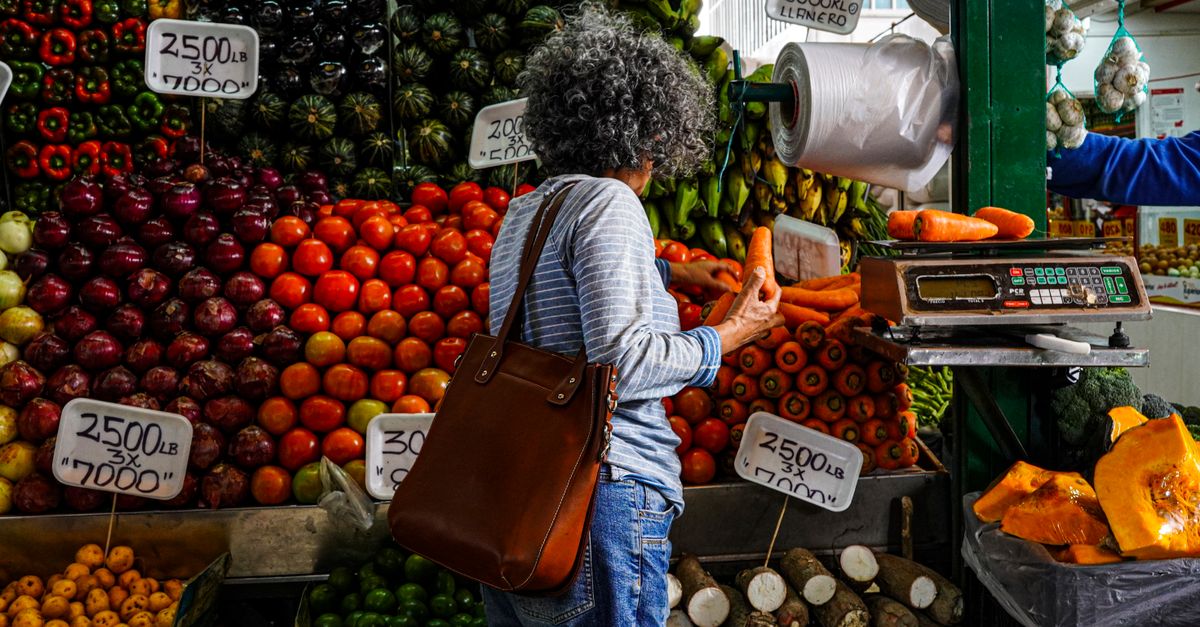
Strong harvests are a natural expectation for lower food prices, but the relationship between production volumes and retail prices is far from direct. Prices reflect the interaction of physical supply, logistics, policy, finance, and market structure. A good harvest in tonnes does not automatically mean abundant, cheap food on every table. Below are the main mechanisms that explain why food prices can rise even when aggregate harvests look strong.Main driversMismatch between global supply and exportable supply: A nation may register an abundant harvest yet ship only limited volumes abroad when domestic consumption, state purchasing programs, or quality constraints absorb much…
Read More
How do Americans choose doctors, dentists, and specialists when moving to a new city?

New City, New Doctors: A Guide for Americans

Moving to a new city sets off a series of practical responsibilities, from securing a place to live and selecting schools to lining up new health-care providers. Deciding on a primary care physician (PCP), dentist, or medical specialist becomes both a logistical process and an emotional choice. Across the United States, people rely on a blend of insurance recommendations, online searches, personal referrals, and everyday factors such as proximity, scheduling, and cost to build trustworthy care relationships quickly. This article outlines common decision-making routes, includes practical checklists, and shares example scenarios designed to help newcomers choose wisely.Key factors shaping selectionInsurance…
Read More
Why food security remains fragile

Why Food Security Remains Fragile

Food security refers to a state in which everyone consistently enjoys physical and economic access to adequate, safe, and nourishing food. Although agricultural productivity has advanced and child mortality has fallen in certain regions over recent decades, global food security continues to be vulnerable. A combination of environmental, economic, political, social, and technological forces steadily weakens the availability, accessibility, utilization, and stability of food resources. This analysis outlines the primary drivers, supports them with examples and trend data, and points to practical strategies for reducing this vulnerability.Core drivers of fragilityConflict and instability: Armed conflict is the single largest driver of…
Read More
Portugal: What makes Portugal attractive for founders balancing lifestyle and market access

American Grocery Habits: A Global Comparison

American grocery shopping is shaped by scale, convenience, technology, and a fragmented retail landscape. Compared with many other countries, the U.S. emphasizes large-format stores, car-based shopping trips, broad choices in processed and packaged goods, and rapid adoption of e-commerce services. These patterns reflect economic structure, geography, cultural habits, and policy differences such as food-assistance programs and labeling standards.Store formats and retail structureLarge-format dominance: Supercenters and major big-box retailers (Walmart, Target, supercenters operated by regional chains) along with warehouse clubs (Costco, Sam’s Club) play a defining role in U.S. grocery habits, as many consumers stock up in bulk and favor comprehensive…
Read More
What is civic engagement like in small towns versus big cities in the United States?

Understanding Civic Engagement: US Small Towns & Metros

Civic engagement refers to the various ways individuals take part in public life to shape community conditions and influence policy, including voting, joining public meetings, serving on boards, volunteering, becoming part of civic groups, demonstrating, donating, and using digital platforms for organization. The environment where people reside, whether in a small town or a large city, affects the available opportunities, social expectations, and limitations tied to these actions. Variations stem from factors such as population density, social networks, institutional strength, demographic diversity, transportation and communication systems, and the overall scale of public challenges.Essential factors for evaluating life in small towns…
Read More
What influence operations are and how to spot them

Unmasking Influence Operations: Tips for Detection

Influence operations are coordinated efforts to shape opinions, emotions, decisions, or behaviors of a target audience. They combine messaging, social engineering, and often technical means to change how people think, talk, vote, buy, or act. Influence operations can be conducted by states, political organizations, corporations, ideological groups, or criminal networks. The intent ranges from persuasion and distraction to deception, disruption, or erosion of trust in institutions.Key stakeholders and their driving forcesInfluence operators include:State actors: intelligence agencies or political entities operating to secure strategic leverage, meet foreign policy objectives, or maintain internal control.Political campaigns and consultants: organizations working to secure electoral…
Read More
Why the world is talking about a chip race

Unpacking the World’s Chip Race Conversation

The phrase "chip race" captures a global scramble for leadership in semiconductor design, fabrication, equipment and supply-chain control. Semiconductors are the foundational technology behind smartphones, data centers, electric vehicles, telecom networks, medical devices and modern weapons. When access to advanced chips becomes a bottleneck, entire industries and national strategies are affected. That is why companies, governments and research institutions are pouring money, policy and prestige into dominating the next generation of chips.What is at stakeEconomic growth: Advanced semiconductor manufacturing and design generate high-wage jobs, exports and technology spillovers across industries.National security: Chips are dual-use—critical for both civilian infrastructure and defense…
Read More