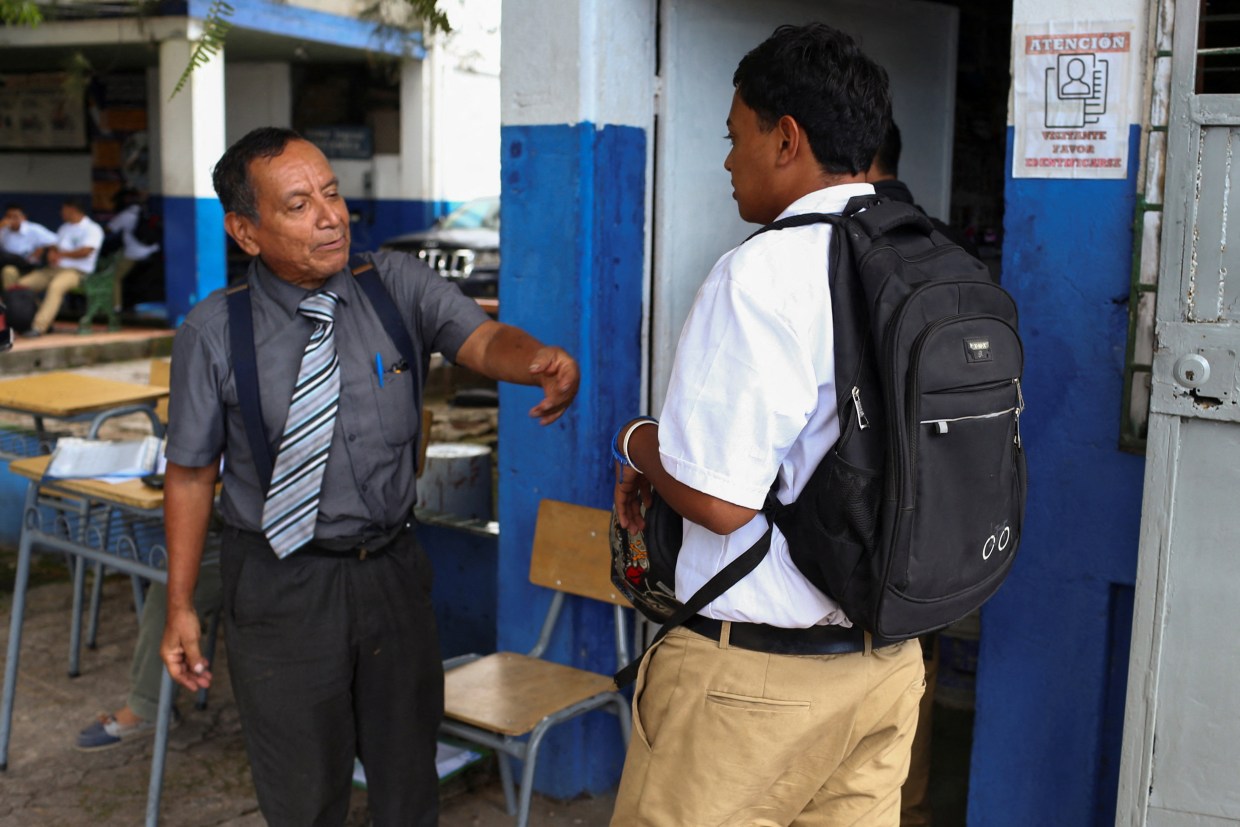

A new adjustment in the education system of El Salvador has generated discussion among teachers, students, and parents. After a former military captain was named as the minister of education, schools have implemented fresh grooming rules, notably banning specific trendy hairstyles like mohawks and “Edgar” cuts.
The decision, aimed at promoting discipline and uniformity within academic institutions, reflects a broader effort to enforce stricter standards among students. The ministry’s directive argues that maintaining a neat and orderly appearance is essential for fostering a focused learning environment. According to officials, hairstyles considered distracting or non-traditional will no longer be tolerated in classrooms.
El veto se centra en cortes de cabello como el “Edgar”, que presenta lados cortos y limpios con un flequillo recto sobre la frente, y los mohicanos, conocidos por su atrevida franja vertical de cabello a lo largo del cuero cabelludo. Ambos estilos han ganado popularidad entre las generaciones más jóvenes en América Latina y los Estados Unidos, convirtiéndose en símbolos de individualidad y expresión cultural.
Sin embargo, los críticos sostienen que estas limitaciones violan las libertades individuales y sofocan la creatividad. Las plataformas de redes sociales han sido escenario de intensas discusiones, con muchas personas cuestionando si los cortes de cabello realmente afectan el rendimiento académico. Tanto padres como estudiantes han expresado inquietudes de que las normas podrían desencadenar acciones disciplinarias innecesarias, mientras que otros piensan que el estilo personal no debería influir en la educación de un estudiante.
Proponents of the new policy counter that uniformity in appearance helps reduce bullying and social pressure related to trends. They claim that by limiting extreme hairstyles, schools can prevent distractions and ensure students focus on academics rather than fashion. The education ministry has emphasized that the intention is not to suppress individuality, but to maintain an environment conducive to learning.
This move comes at a time when El Salvador is undergoing several reforms under current leadership, with an increased focus on order and discipline in public institutions. While similar regulations have been implemented in other countries, enforcement often varies by region and school policy.
Whether these measures will positively influence academic performance remains uncertain. For now, students are expected to comply, and families may need to adjust their approach to personal grooming choices for the upcoming school year.
The conversation about this policy underscores a broader issue: how should the boundary be determined between personal expression and organizational rules? As El Salvador progresses with its new educational policies, the discussion around balancing personal freedom with discipline is expected to persist.