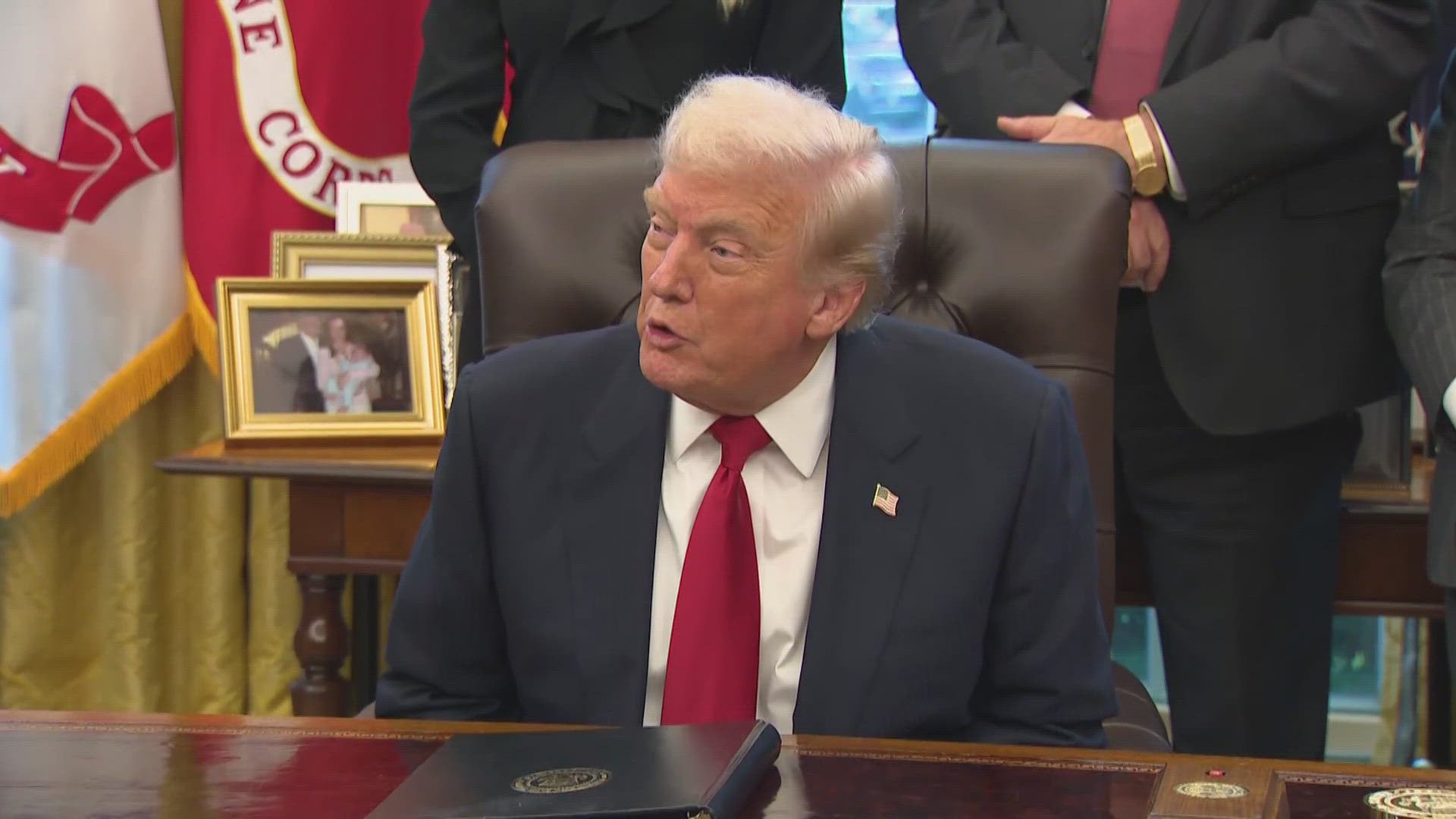

Ex-President Donald Trump has put forward a novel economic initiative designed to alleviate the financial strain on American families. This proposal, which entails distributing $2,000 rebate checks linked to tariffs, has ignited discussion among financial experts, legislators, and the general populace, prompting inquiries into its prospective effects on rising prices, international commerce, and the overall economic landscape.
Trump’s proposal emerges in the context of ongoing discussions about how to manage the economic fallout from international trade policies. Tariffs, which are taxes imposed on imported goods, have long been a tool used by the United States to protect domestic industries, influence foreign policy, and generate revenue. However, they can also lead to higher prices for consumers and complications in global trade relationships. By offering rebate checks equivalent to certain tariff revenues, the idea seeks to offset the increased costs faced by American households, essentially returning money collected from import taxes directly to citizens.
Understanding the mechanics of the rebate
The $2,000 rebate concept is designed to function as a direct compensation to consumers for higher prices resulting from tariffs on imported products. Essentially, if tariffs drive up the cost of goods, the government would send payments to eligible Americans to neutralize some of that financial pressure. Proponents argue that this approach could provide immediate relief for families struggling with rising prices, particularly for essential items like food, clothing, and electronics.
However, detractors warn that the proposal might lead to unforeseen outcomes. Although it could briefly boost discretionary spending, certain financial experts caution that it might worsen inflationary trends. By infusing capital into the market without a commensurate rise in available goods, prices could escalate even more, possibly eroding the intended advantage of the refund. Furthermore, questions arise regarding the funding mechanism for such an initiative, its practical execution, and the potential for political division stemming from its introduction.
Economic and Political Ramifications
The proposal also carries significant political weight. By linking the rebates to tariffs — a hallmark of Trump’s previous trade policies — the measure appeals to a base that supports aggressive protectionist strategies. It positions the former president as a champion of the “everyday American,” directly addressing concerns about the cost of living and economic inequality. At the same time, it revives debates over the effectiveness of tariffs themselves. Critics argue that tariffs often hurt domestic businesses that rely on imported materials, potentially undermining the long-term health of the economy.
From a broad economic standpoint, these rebates have the potential to shape how consumers act. With an injection of $2,000 per payment, households might boost their expenditures, thereby bolstering economic expansion in the near term. Businesses in retail and services could experience heightened demand, and specific industries might enjoy a temporary surge. However, economists are split on whether this initiative would result in lasting enhancements to the economic climate or simply offer a brief stimulus with restricted enduring impact.
Potential effects on trade relations
Another intricate aspect involves the repercussions for global commercial interactions. Tariffs represent a divisive instrument, frequently inciting reciprocal actions from commercial allies. Although rebate payments could mitigate the internal perception of tariffs, they do not eradicate the fundamental obstacles to trade. Nations impacted by U.S. tariffs might persist in levying their own duties or pursue alternative strategies to safeguard their sectors, potentially escalating commercial friction.
Moreover, businesses involved in global supply chains could face challenges if tariffs and corresponding rebates are not implemented carefully. Companies that rely on imported materials might experience fluctuations in costs that are difficult to predict, potentially disrupting production schedules and affecting employment. Policymakers would need to balance the domestic benefits of rebates with the broader consequences for international commerce and domestic industries alike.
Public reception and viability
Public reaction to the rebate proposal has been mixed. Some Americans welcome the idea as a direct means to alleviate financial stress, particularly in a climate of rising living costs. Others view it skeptically, questioning the practicality of administering such payments and the long-term implications for the economy. Social media and news outlets have amplified both support and criticism, reflecting broader divisions in public opinion about trade policy, government spending, and economic intervention.
Implementation viability presents another crucial consideration. Distributing $2,000 payments to millions across the nation would necessitate a strong administrative framework, encompassing precise identification of qualified individuals, seamless integration with financial institutions, and safeguards against fraudulent activities. Previous initiatives involving stimulus payments and rebate schemes underscore the difficulties in effectively managing extensive payment distributions. Any holdups or inaccuracies could erode public trust and diminish the program’s overall impact.
While the proposal is still largely conceptual, it has reignited discussions about how best to support households facing economic pressures. The rebate checks illustrate a broader debate about the intersection of trade policy and domestic welfare: how to protect American industries without placing undue burden on consumers. Policymakers, economists, and the public will likely continue to scrutinize the plan’s feasibility, potential economic impact, and political ramifications in the months ahead.
Ultimately, the $2,000 tariff rebate proposal underscores the ongoing tension in economic policymaking: balancing short-term relief for citizens with long-term stability for the national and global economy. As debates unfold, it remains to be seen whether the initiative will gain traction, undergo modifications, or fade into the broader landscape of proposals aimed at addressing the cost of living.
Irrespective of the final result, Trump’s proposed rebate has already ignited crucial discussions concerning the interplay between trade and economic strategies and daily existence, underscoring the difficulties in formulating policies that are both fair and financially robust.