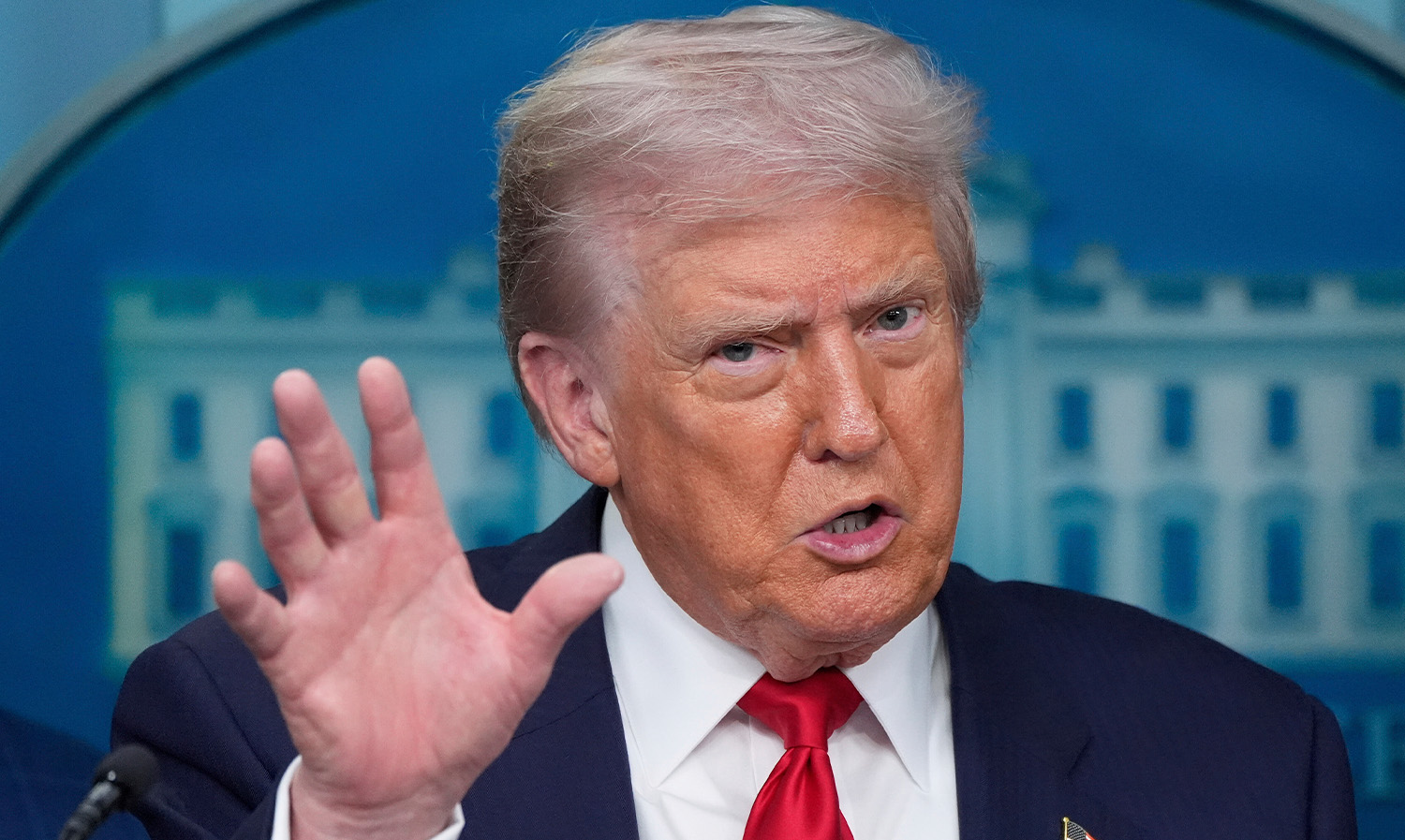

Former President of the United States, Donald Trump, is once more in the spotlight following a daring promise: to reduce prescription drug costs by an incredible 1,500%. This statement has stirred enthusiasm among his followers and ignited discussions across various political arenas. However, the magnitude of the figure has prompted numerous experts, commentators, and regular citizens to ponder over the feasibility, mathematical validity, and potential implementation of such a proposal.
At first glance, the claim grabs attention. The cost of medications has been a continuous concern for countless people in the United States, impacting not only those requiring treatment but also insurance companies, medical centers, and government financial plans. The notion of significantly reducing drug costs is attractive, especially for individuals who find it challenging to pay for essential treatments every month. Nonetheless, when the reduction percentage is more than the entire price of the item itself—as suggested by a claim of “1,500% reduction”—it naturally prompts inquiries about the preciseness and purpose of such a statement.
To understand the feasibility of such a promise, it is important to look at the math. In basic terms, a reduction of 100% would make a product free. Going beyond that—let alone reaching 1,500%—doesn’t align with conventional pricing logic. A cut of 1,500% would suggest not only eliminating the cost entirely but also effectively paying consumers many times over for taking the drug, something that is not standard practice in any market, let alone the pharmaceutical industry.
This has caused analysts to think that the number might be more figurative than exact, meant to highlight the intensity of Trump’s discontent with existing pricing frameworks, rather than act as an exact mathematical policy proposition. Trump is known for employing exaggerated language to draw attention and shape policy discussions, and this comment seems to adhere to that trend.
Still, underneath the exaggerated figure lies a real and ongoing policy issue: the exceptionally high cost of prescription medications in the United States compared to other developed countries. The U.S. pharmaceutical market is unique in that it allows for drug prices to be set largely by manufacturers, without government-imposed caps seen in countries with single-payer systems or more aggressive price negotiation frameworks. As a result, some drugs cost several times more in the U.S. than they do elsewhere, leading to public outrage and increasing calls for reform.
Trump’s past actions concerning drug pricing provide some understanding of how he could tackle the issue if he has the chance. While he was in office, he advocated for a “most favored nation” rule aimed at linking U.S. drug costs to the less expensive rates paid by other affluent countries. Nevertheless, this plan encountered significant opposition from the pharmaceutical sector and was eventually halted by the courts. Additionally, he issued executive orders designed to permit the import of specific medicines from Canada, due to their reduced costs. However, these efforts encountered logistical and legal challenges that hindered their broad execution.
The 1,500% figure, then, is best understood in the context of Trump’s broader political strategy. By making an extreme promise, he positions himself as a champion for consumers while casting his opponents—whether they be Democrats, industry executives, or bureaucrats—as defenders of an unjust system. The reality, however, is that any serious reduction in drug prices would require cooperation between Congress, regulatory agencies, and the pharmaceutical industry, as well as significant changes to patent law, pricing transparency rules, and Medicare’s negotiating power.
Economic experts warn that while aggressive price cuts could lower costs for patients in the short term, they could also have unintended consequences. The pharmaceutical industry often argues that high drug prices help fund research and development, enabling the creation of new treatments. A drastic reduction in revenue, they contend, could slow innovation and reduce the number of new drugs brought to market. Critics of this argument counter that much of the industry’s R&D budget is funded by taxpayers through grants and government-backed research programs, and that drug companies often spend more on marketing than on developing new treatments.
For patients, the stakes are tangible and immediate. Many Americans ration medications, skip doses, or go without treatment altogether because of high costs. In life-or-death cases—such as insulin for diabetics or chemotherapy drugs for cancer patients—unaffordable prices can have devastating consequences. The public’s frustration is not unfounded, and politicians of both parties have recognized the political potency of promising relief.
Trump’s latest statement taps into this frustration but leaves many details unaddressed. Which drugs would be subject to these dramatic price cuts? Would the reductions apply to brand-name drugs, generics, or both? How would the government enforce such cuts in a largely private, market-driven healthcare system? Without answers to these questions, the promise remains more of a headline-grabber than a concrete policy plan.
The political calculus is clear: drug pricing is a bipartisan concern, and making sweeping promises can be a powerful campaign tool. But the execution is far more complicated. Past efforts to overhaul the system have stumbled over the influence of pharmaceutical lobbyists, the complexity of U.S. healthcare laws, and the global nature of the drug supply chain. Any attempt to radically alter pricing would likely face years of legal challenges and political resistance.
Currently, minor and gradual changes have proven to be somewhat effective. The Inflation Reduction Act, enacted during President Biden’s term, introduced policies enabling Medicare to discuss prices for specific expensive medications for the first time and imposed limits on insulin costs for the elderly. Although these changes are less comprehensive than Trump’s expansive language, they signify concrete progress toward making healthcare more affordable.
Whether Trump’s 1,500% promise is remembered as a serious policy idea, a rhetorical flourish, or simply campaign theater will depend on how it is developed in the months ahead. For now, it stands as an example of how political language can blur the lines between ambition and reality—especially on issues as deeply personal and financially burdensome as the cost of medicine.
The underlying truth is that Americans pay far more for prescription drugs than citizens in comparable nations, and addressing that disparity will require a sustained, multifaceted approach. Whether through negotiation, regulation, or restructuring of the pharmaceutical market, the goal of lowering costs is widely shared. The challenge lies in moving from grandiose promises to workable, legally sound, and economically sustainable solutions—something no administration, Republican or Democrat, has yet managed to fully achieve.