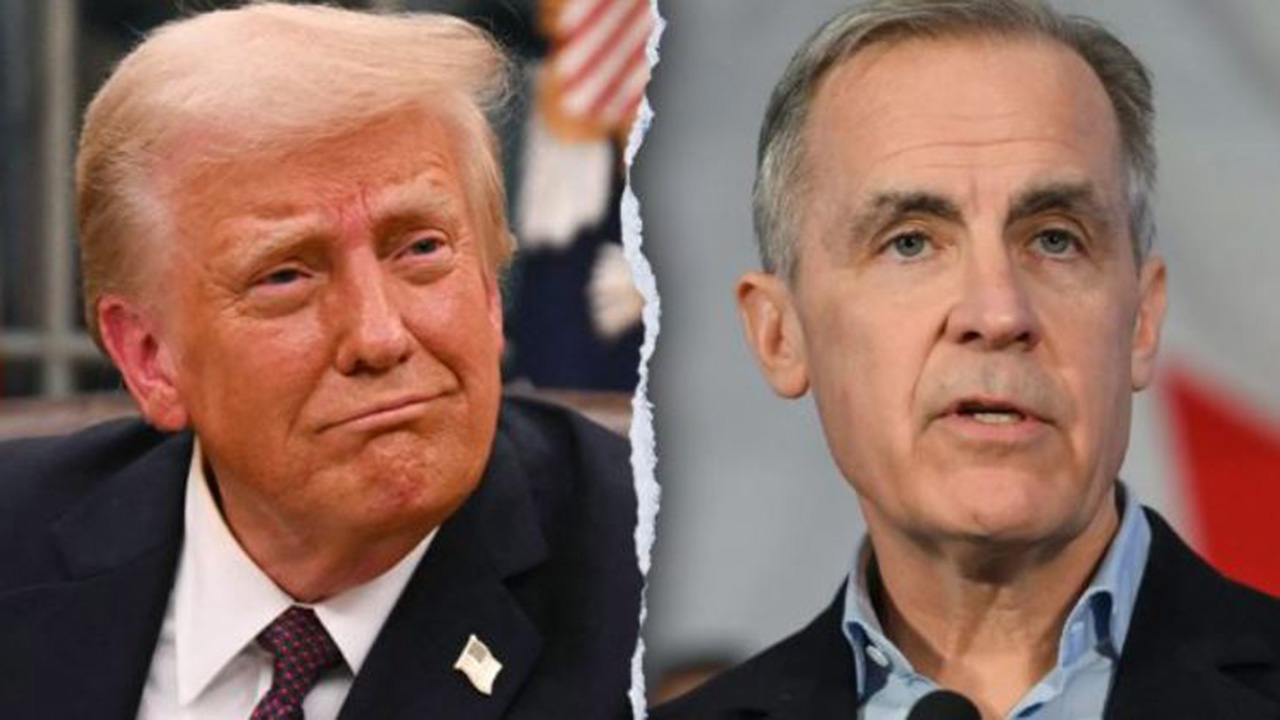

In recent remarks that have drawn significant attention from political analysts, business leaders, and international observers, former U.S. President Donald Trump has raised the prospect of imposing a substantial tariff—up to 35%—on goods imported from Canada. The proposal, though not yet formalized into policy, has already sparked conversations about the potential impact on the longstanding economic relationship between the two neighboring countries.
Trump, recognized for his aggressive stance on global trade while in office, indicated that these tariffs would be designed to safeguard American industries and laborers. His statements demonstrate a persistence of the protectionist discourse that was a hallmark of his administration’s trade strategies, especially during the overhaul of the North American Free Trade Agreement, resulting in the establishment of the United States-Mexico-Canada Agreement (USMCA).
The proposal to levy a 35% duty solely on Canadian products reflects a heightened rhetoric, surpassing even Trump’s earlier comments. His political journey has often seen him condemn what he views as inequitable trade actions by various nations, including major partners. Canada, maintaining strong commercial and diplomatic relations with the U.S., has not escaped these criticisms. Trump has in the past pointed fingers at Canada for participating in trade activities that harm American producers, especially in industries like dairy, lumber, and cars.
The possibility of implementing new tariffs brings up numerous inquiries regarding the future of trade relations between the U.S. and Canada, which have traditionally been marked by collaboration and mutual advantage. Canada ranks among the top trading associates of the United States, with a substantial exchange of goods and services that contributes to the employment of millions on both sides of the boundary. Any major interruption in this partnership might lead to widespread economic repercussions, impacting sectors that include manufacturing, agriculture, retail, and logistics.
Industry associations and commercial entities have started voicing their concerns about the possible repercussions of these tariffs. A common fear is that the rising expenses on goods brought in from Canada might not only disrupt supply networks but also lead to higher consumer prices. In a world economy still dealing with inflationary trends, enforcing significant tariffs could worsen the economic difficulties that both companies and families are experiencing.
Additionally, there is concern that Canada’s potential countermeasures might escalate the issue. Historically, trade disagreements between the U.S. and Canada have resulted in reciprocal tariffs, affecting various goods such as aluminum, steel, and agricultural products. Another set of trade limitations could reignite disputes and cause economic instability for both countries.
Legal specialists also highlight that these tariffs must be enforced in line with current global trade agreements, such as the USMCA. Any solitary action to introduce tariffs without adequate reasoning might result in legal opposition or formal disagreements through recognized trade dispute resolution processes. This introduces additional complexity to the matter, rendering it anything but a simple policy shift.
From a political standpoint, Trump’s remarks are seen by some as an appeal to his core supporters, many of whom favor strong protectionist measures designed to prioritize American industries over global competition. The suggestion of a 35% tariff fits into this broader narrative of economic nationalism, a theme that was central to Trump’s previous campaigns and could feature prominently in any future political ambitions.
For Canadian authorities, the remarks have led to appeals for maintaining peace but also staying alert. Government members have stated that although there hasn’t been any official alteration in policy, they are ready to protect Canada’s economic concerns if the circumstances intensify. Diplomacy, they emphasize, continues to be the favored approach for settling any trade disagreements, highlighting the significant mutual reliance that defines the economic ties between the U.S. and Canada.
Economists caution that implementing tariffs at such elevated levels might lead to unforeseen outcomes. While the intention is to safeguard national sectors, the interconnected nature of worldwide supply chains implies that numerous U.S. companies depend on Canadian parts, resources, and end products. Interrupting these supply chains could harm the exact industries that the tariffs aim to bolster. Additionally, these measures could reduce investor trust and create difficulties for ongoing business dealings between the two nations.
Examinando el tema más amplio de cómo esta retórica se adapta al contexto mundial del comercio. En las últimas décadas, el comercio internacional se ha vuelto más interdependiente, con la prosperidad económica frecuentemente ligada a la colaboración en lugar del aislamiento. Las acciones proteccionistas unilaterales han generado en numerosas ocasiones beneficios a corto plazo para sectores específicos, pero sacrifican la estabilidad y el crecimiento a largo plazo. Los detractores de la propuesta arancelaria de Trump sostienen que desviarse de las políticas de comercio colaborativo pone en riesgo no solo las relaciones bilaterales con Canadá, sino también la posición de Estados Unidos en la economía mundial.
In addition to the economic considerations, there are diplomatic implications to consider. The U.S. and Canada share one of the closest bilateral relationships in the world, built on decades of cooperation across not only economic matters but also defense, environmental policy, and cultural exchange. A sharp escalation in trade tensions could strain these broader ties and complicate efforts to work together on other pressing global issues.
As events unfold, a significant factor will be if Trump’s remarks evolve into concrete policy plans or stay as rhetoric. Previously, Trump’s trade approach has involved strong declarations followed by intricate discussions, occasionally leading to compromises, like the finalization of the USMCA. It is uncertain if a comparable scenario will occur this time.
In the meantime, business leaders in both countries are likely to advocate for stability and predictability in trade relations. Many industries have spent years building cross-border partnerships that are integral to their success, and sudden policy shifts could jeopardize these efforts. There is also the question of consumer impact, as increased tariffs often translate into higher prices for everyday goods, something that could have political ramifications in both countries.
The potential for a 35% tariff on Canadian goods is, at this stage, still hypothetical. Nonetheless, the mere suggestion underscores the fragility of international trade relationships and the importance of careful negotiation and dialogue. In an era where economic interconnectedness is more vital than ever, policies that seek to sever or strain those ties must be weighed with caution.
In the future, the global community will carefully observe how the United States manages its economic ties with Canada and whether this new proposal gathers momentum in the political arena. No matter the final result, the conversation has already sparked renewed discussions about protectionism, globalization, and the influence of national priorities on forming trade policy.
For now, the suggestion of such sweeping tariffs serves as a reminder of the unpredictable nature of international economic policy, particularly when it intersects with domestic political agendas. While no immediate action has been taken, the conversations sparked by Trump’s comments will likely continue to influence both political discourse and business decision-making in the months ahead.
In the weeks ahead, there might be more insight into whether this threat is a strategic move for negotiations, a message directed towards national audiences, or the beginning of a more substantial change in trade relations between two of North America’s closest partners. Until that time, companies, decision-makers, and the public on either side of the border will have to consider the possible consequences of a policy that might transform an essential element of the North American economic landscape.