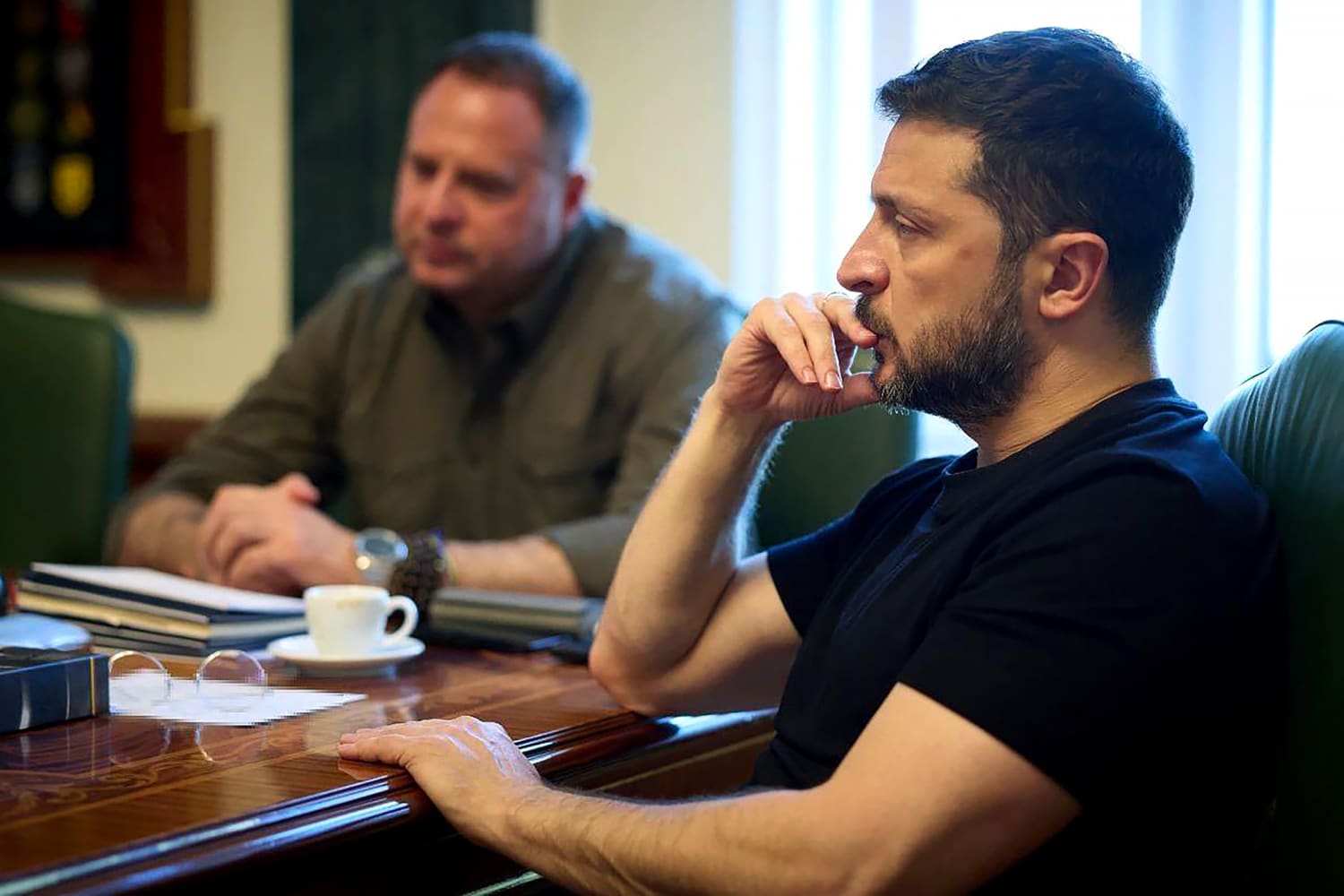

In a period marked by extraordinary resilience and collective struggle, Ukraine is now facing a growing wave of internal dissent that could challenge the fragile unity forged during wartime. At the center of this unrest is President Volodymyr Zelenskyy, whose leadership—once hailed as a unifying force in the face of foreign aggression—is now drawing criticism from various corners of Ukrainian society.
The public’s dissatisfaction is being expressed more openly, especially as the conflict continues indefinitely. The economic challenges, the weariness from the extended confrontation, and increasing worries about governmental actions are changing the nature of political discussions within the nation. Though Zelenskyy still embodies Ukraine’s defiance internationally, at home, disappointment is increasing.
One major area of debate arises from views on openness and management. As the armed forces proceed with their actions, both the public and community heads call for more transparent dialogue, greater involvement in decision processes, and stronger responsibility from authorities. Concerns are surfacing about not only military tactics but also national matters like corruption, economic governance, and the handling of conscription and service in the armed forces.
Zelenskyy’s administration, initially celebrated for its swift mobilization and strong messaging in the early stages of the conflict, now faces a more critical public. Some citizens feel their voices are being overlooked in favor of centralized authority, and frustrations are boiling over in local protests, online forums, and independent media platforms.
Among young individuals and civic advocates, there is an increasing perception that today’s leadership needs to adapt to address the new stage of the conflict. As Ukraine transitions from urgent survival to prolonged resistance and reconstruction, the demand for openness, collective sacrifice, and democratic procedures has intensified. Requests for changes that were previously delayed due to national security concerns are now reemerging as key topics in public discussion.
This internal strain presents a complex challenge. On one hand, national unity remains essential for the country’s ability to resist external aggression. On the other hand, open societies naturally produce diverse viewpoints, especially in times of crisis. The tension between these two realities is playing out in real time across Ukraine’s political and social landscape.
Críticos afirman que la administración no ha hecho lo suficiente para repartir equitativamente las cargas de la guerra. Informes sobre la aplicación desigual del servicio militar, el supuesto favoritismo y el escaso apoyo a los soldados heridos y las familias desplazadas han alimentado el resentimiento. Para muchos, los sacrificios realizados en el frente deben ser correspondidos con auténtica solidaridad y justicia en todos los niveles de la sociedad.
Economic pressures are also intensifying public anxiety. With inflation, unemployment, and infrastructure challenges straining everyday life, the population is looking to its leaders for answers. Aid from foreign partners has provided critical support, but questions persist about long-term economic stability and how resources are being managed internally.
Moreover, the mental and emotional strain of existing under perpetual danger is immeasurable. Families torn apart by conflict, cities marked by attacks, and communities dealing with loss are also facing political instability domestically. This intricate array of difficulties is reshaping the connection between citizens and their leaders.
Despite the mounting criticism, it is important to acknowledge that President Zelenskyy continues to maintain a significant level of support, particularly for his role in unifying Ukraine’s global allies and sustaining international attention on the conflict. His ability to represent Ukraine on the world stage has brought vital military and financial assistance, even as domestic pressures increase.
Still, Ukraine’s wartime leadership now faces the difficult task of balancing external diplomacy with internal reform. The demands of managing a war effort while maintaining democratic legitimacy and public trust require constant recalibration. As civic voices grow louder, the administration must adapt in ways that preserve cohesion without silencing dissent.
What the future holds for Ukraine will rely not just on the results of its military actions, but also on its capacity to uphold social and political strength internally. Should the government manage criticism positively—by interacting with civil society, ensuring transparency, and sharing responsibility justly—it might further consolidate the unity that is currently facing challenges.
Reflective moments within are challenging but can also present chances for rejuvenation. Ukraine’s continuous battle for self-governance is more than just a matter of land or protection—it is equally about the identity it aims to establish. Paying attention to its citizens, even in times of discord, might be among the most effective methods to support that aspiration.