Our website use cookies to improve and personalize your experience and to display advertisements(if any). Our website may also include cookies from third parties like Google Adsense, Google Analytics, Youtube. By using the website, you consent to the use of cookies. We have updated our Privacy Policy. Please click on the button to check our Privacy Policy.

Economy

https://businessinsurrey.com/wp-content/uploads/2024/01/IMG_4991.jpeg

The Framework of Inclusive Growth

```html Comprehending Inclusive Growth: An In-Depth Investigation ```Inclusive growth is a term that has emerged prominently in economic discussions and policy-making. It refers to an economic growth paradigm that aims to provide equitable opportunities to every section of society, thereby ensuring that the benefits of economic progress are distributed fairly across the population. In a world where economic disparities are widening, inclusive growth represents a pivotal approach to sustainable development.```html Understanding Equitable Development ```At its core, inclusive growth focuses on creating a resilient economic framework that supports a wide array of demographics, including the marginalized, the underprivileged, and those who…
Read More
crop man taping carrying box with scotch

Inside the Sharing Economy

What is the Sharing Economy?The sharing economy, a transformative force in today’s marketplace, refers to an economic model defined by peer-to-peer (P2P) exchanges of goods and services. This system enables individuals to rent or borrow assets owned by others, often facilitated through digital platforms. It challenges traditional business models by prioritizing access over ownership, leading to more efficient resource utilization.Origins and Development of the Sharing EconomyThe sharing economy's genesis can be traced back to the early 2000s, but its roots extend further into practices like carpooling and community tool sheds. With advancements in technology, particularly the proliferation of smartphones and…
Read More
numbers on monitor

The Dynamics of Market Economies

Understanding the Market EconomyIn a quickly evolving international environment, the idea of a market-driven economy is extremely significant. A market-driven economy is a system in which goods and services' prices are dictated by open competition alongside the dynamics of supply and demand, involving limited governmental interference. This is different from centrally planned economies where governmental bodies decide the crucial economic aspects.Key Features of a Market EconomyA key feature of a market economy is its dependence on personal decision-making. Both producers and consumers engage in economic activities willingly, affecting the market with their decisions. This is supported by a number of…
Read More
Planned Economy Explained

Planned Economy Explained

Understanding a Planned EconomyA planned economy, often referred to as a command economy, represents an economic system where the government or central authority makes all decisions regarding the production and distribution of goods and services. In this type of economic system, the state owns the resources and coordinates the country's economic activity to meet pre-established goals. This contrasts sharply with a market economy where the forces of supply and demand make these determinations.Characteristics of a Planned EconomyIn a planned economy, centralization is key, as all decisions about the allocation of resources and distribution are made centrally by the government. Essential…
Read More
aerial photography of brown concrete building

Insights into Developed Economies

What defines an Advanced Economy?A developed economy, often referred to as an advanced economy, is characterized by several distinct traits that differentiate it from developing economies. These traits include high levels of industrialization, strong infrastructure, high income per capita, advanced technological adoption, and a robust standard of living. In the global context, countries like the United States, Germany, and Japan are often cited as classic examples of developed economies. This article explores the various aspects that define a developed economy, emphasizing data-backed insights, comparative studies, and real-world examples for comprehensive understanding.High Income Per CapitaIndividual income is a major metric utilized…
Read More
Sharing Community Fund — News — Greater Washington Community ...

Economic Socialism vs. Capitalism

What does Economic Socialism mean?Socialist economics refers to a socio-economic structure in which the community, usually through the state, owns or controls the means of production, distribution, and exchange. This economic approach aims to tackle disparities and ensure a fair allocation of resources. The concept frequently brings to mind both past and present debates and continues to be an important topic in political and economic conversations, distinctly opposing capitalism's focus on private property and market-based distribution.Fundamental Concepts of Socialist EconomicsEconomic socialism is anchored in several core principles:1. **Collective Ownership**: At its core, economic socialism advocates for the collective or communal…
Read More
smartphone and documents on desk

The Impact of Progressive Taxes on Society

Understanding Progressive Tax PolicyA progressive tax policy is a taxation system where the tax rate increases as the taxable amount increases. This approach is designed to ensure that individuals with higher incomes contribute a larger proportion of their income in taxes compared to those with lower incomes. The underlying principle is to alleviate the financial burden on lower-income earners while requiring wealthier citizens to pay more, thereby promoting economic equity.Mechanics of Progressive TaxationIn a progressive tax system, income tax brackets are established, and each bracket corresponds to a specific tax rate. As an individual's income rises, they move into higher…
Read More
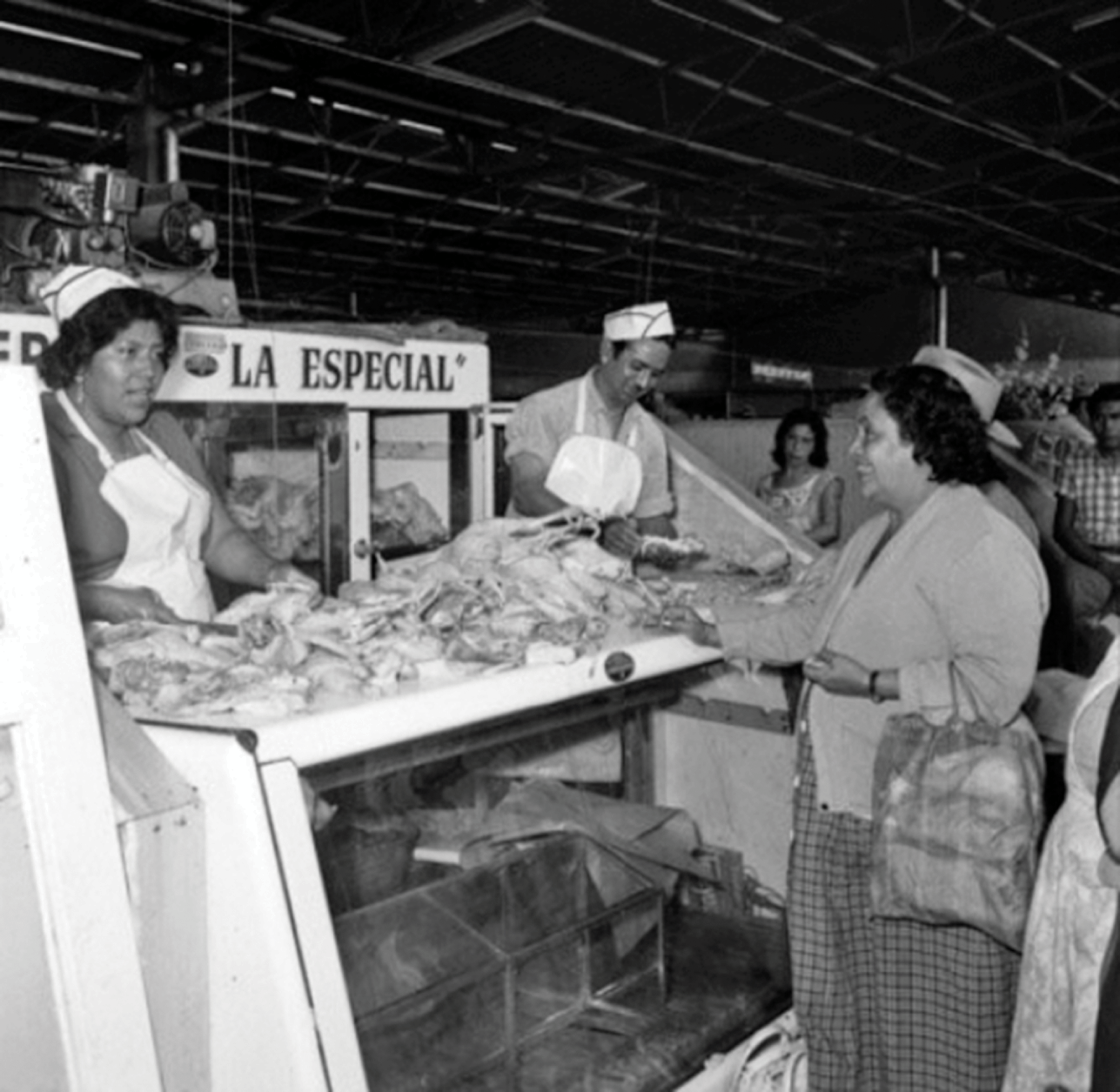
Foodways in the Twentieth-Century City

The Balance of Market Forces

Understanding Perfect CompetitionIn the field of economics, perfect competition is a hypothetical market model distinguished by a total balance of different factors, meaning that no single seller or buyer can control the pricing of products and services. This idea functions as a standard for evaluating actual market structures. While it is seldom observed in its true form, grasping perfect competition offers vital understanding of economic efficiency and consumer well-being.Features of Ideal CompetitionPerfect competition is characterized by a number of fundamental traits that set it apart from different market types:1. Numerous Buyers and Sellers: In a perfectly competitive market, there are…
Read More
https://allthatsinteresting.com/wordpress/wp-content/uploads/2014/11/Favela-Nova_Friburgo-closeup.jpg

The Gini Coefficient: A Key Economic Indicator

How is the Gini Coefficient defined?The Gini index, also known as the Gini coefficient, is a crucial statistical measure used to gauge the degree of income or wealth inequality within a nation or a group. Developed by the Italian statistician Corrado Gini in 1912, this index has become an integral tool for economists and policymakers striving to understand economic disparities and their societal implications.Understanding the Gini Index ScaleThe Gini index operates on a scale from 0 to 1, where 0 represents perfect equality (everyone has the same income or wealth) and 1 indicates perfect inequality (one person has all the…
Read More
https://www.investopedia.com/thmb/XLcrtrcVJWwxLhdvSNRVKtwT-lQ=/1500x0/filters:no_upscale():max_bytes(150000):strip_icc()/GettyImages-1460371022-e4a89318dbd744c0a00e11624cfecaa3.jpg

Real-World Oligopoly Examples

Gaining Insight into Oligopoly: An In-Depth Analysis of Market FrameworksIn the world of economics, various market structures define how businesses operate within a specific industry. One such structure is an oligopoly, which is characterized by a small number of firms that dominate the market. Understanding what an oligopoly is involves exploring its key features, economic implications, and real-world examples.Explaining OligopolyAn oligopoly is a market structure in which a handful of firms hold significant market power, allowing them to influence prices and production decisions. Unlike in a monopoly, where a single company controls the entire market, or perfect competition, where numerous…
Read More