Our website use cookies to improve and personalize your experience and to display advertisements(if any). Our website may also include cookies from third parties like Google Adsense, Google Analytics, Youtube. By using the website, you consent to the use of cookies. We have updated our Privacy Policy. Please click on the button to check our Privacy Policy.

International

What makes a franchise model attractive compared to company-owned growth?

Franchise Benefits: What Makes It a Superior Growth Option?

Businesses seeking expansion often face a strategic choice: grow through company-owned locations or adopt a franchise model. While both paths can lead to scale, the franchise model has proven especially attractive across industries such as food service, retail, fitness, and hospitality. Its appeal lies in how it distributes risk, accelerates growth, and leverages local entrepreneurship while maintaining brand consistency.Maximizing Capital Utilization and Accelerating GrowthOne of the strongest advantages of franchising is capital efficiency. In a company-owned model, the brand must fund real estate, build-outs, equipment, staffing, and operating losses during ramp-up. This can severely limit the speed of expansion.Through franchising,…
Read More
Why recycling alone won’t solve plastic pollution

Rethinking Plastic: Why Recycling Falls Short

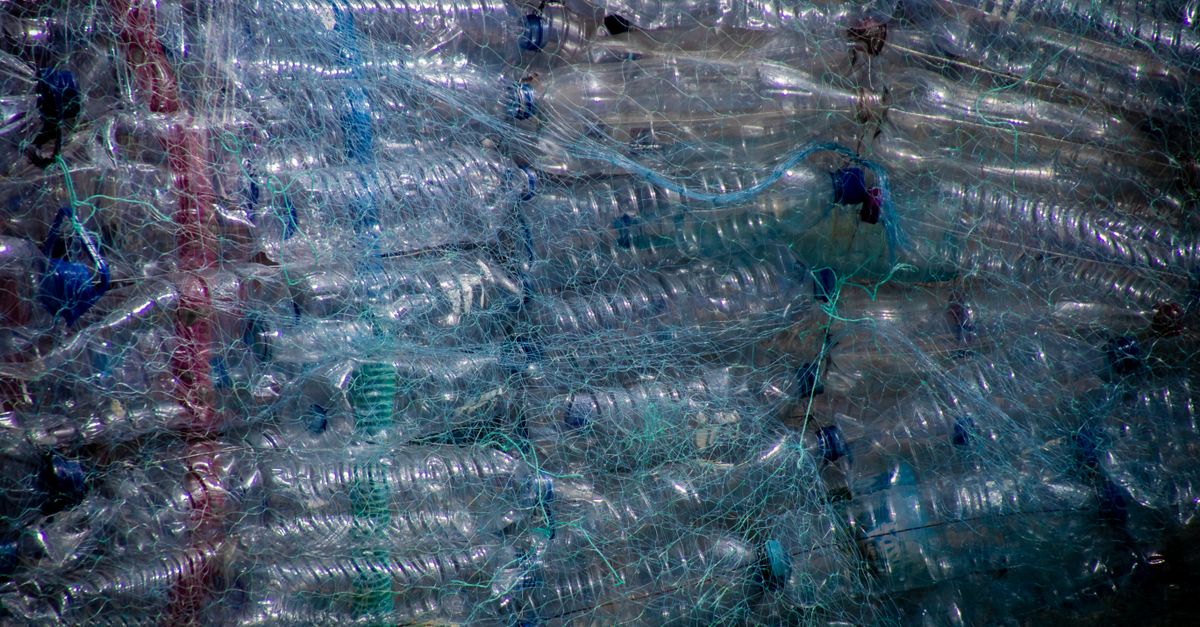
Plastic recycling is often presented as the silver bullet for plastic pollution. The reality is more complex. Recycling matters, but it cannot by itself stop plastic pollution because of technical, economic, behavioral, and systemic limits. This article explains those limits, provides evidence and cases, and outlines complementary strategies that must run alongside recycling to produce real change.The current scale: production, waste, and what recycling actually achievesGlobal plastic production has grown to well over 350 million metric tons per year in recent years. A landmark analysis of historical production and waste found that, of all plastics ever produced through 2015, only…
Read More
What critical minerals are and why they’re contested

Critical Minerals: Essential Resources, Endless Conflicts

Critical minerals are naturally occurring elements and compounds that modern economies depend on for manufacturing, energy transition, and defense, but that face concentrated or fragile supply chains. Governments and analysts typically assess criticality by weighing two dimensions: the mineral’s economic importance for key technologies and the risk that supply will be disrupted. That combination — high demand and high vulnerability — is what makes a mineral “critical.”Why they matter nowAs the world accelerates toward electrification, renewable power, digital networks and sophisticated defense technologies, the need for specific minerals has surged. Lithium, cobalt, nickel and graphite form the backbone of modern…
Read More
Why food prices rise even when harvests are strong

Explaining High Food Costs Even with Bumper Crops

Strong harvests are a natural expectation for lower food prices, but the relationship between production volumes and retail prices is far from direct. Prices reflect the interaction of physical supply, logistics, policy, finance, and market structure. A good harvest in tonnes does not automatically mean abundant, cheap food on every table. Below are the main mechanisms that explain why food prices can rise even when aggregate harvests look strong.Main driversMismatch between global supply and exportable supply: A nation may register an abundant harvest yet ship only limited volumes abroad when domestic consumption, state purchasing programs, or quality constraints absorb much…
Read More
Why food security remains fragile

Why Food Security Remains Fragile

Food security refers to a state in which everyone consistently enjoys physical and economic access to adequate, safe, and nourishing food. Although agricultural productivity has advanced and child mortality has fallen in certain regions over recent decades, global food security continues to be vulnerable. A combination of environmental, economic, political, social, and technological forces steadily weakens the availability, accessibility, utilization, and stability of food resources. This analysis outlines the primary drivers, supports them with examples and trend data, and points to practical strategies for reducing this vulnerability.Core drivers of fragilityConflict and instability: Armed conflict is the single largest driver of…
Read More
What influence operations are and how to spot them

Unmasking Influence Operations: Tips for Detection

Influence operations are coordinated efforts to shape opinions, emotions, decisions, or behaviors of a target audience. They combine messaging, social engineering, and often technical means to change how people think, talk, vote, buy, or act. Influence operations can be conducted by states, political organizations, corporations, ideological groups, or criminal networks. The intent ranges from persuasion and distraction to deception, disruption, or erosion of trust in institutions.Key stakeholders and their driving forcesInfluence operators include:State actors: intelligence agencies or political entities operating to secure strategic leverage, meet foreign policy objectives, or maintain internal control.Political campaigns and consultants: organizations working to secure electoral…
Read More
Why the world is talking about a chip race

Unpacking the World’s Chip Race Conversation

The phrase "chip race" captures a global scramble for leadership in semiconductor design, fabrication, equipment and supply-chain control. Semiconductors are the foundational technology behind smartphones, data centers, electric vehicles, telecom networks, medical devices and modern weapons. When access to advanced chips becomes a bottleneck, entire industries and national strategies are affected. That is why companies, governments and research institutions are pouring money, policy and prestige into dominating the next generation of chips.What is at stakeEconomic growth: Advanced semiconductor manufacturing and design generate high-wage jobs, exports and technology spillovers across industries.National security: Chips are dual-use—critical for both civilian infrastructure and defense…
Read More
Iranians confront a post-Khamenei reality with relief, disbelief and anxiety

The Post-Khamenei Era: Iranian Perspectives

For the first time in decades, Iranians awoke to a nation no longer led by Ayatollah Ali Khamenei, after coordinated US-Israeli strikes claimed his life, leaving the country facing a profoundly uncertain chapter.Diverse reactions unfolding nationwideThe news of Khamenei’s death has triggered a broad array of reactions throughout Iran, where residents in the capital and other major cities voiced restrained optimism, seeing the conclusion of his decades-long leadership as a moment that might reshape the country’s future. In several districts, impromptu celebrations broke out as crowds honked car horns, waved garments, and even pulled down monuments linked to the Islamic…
Read More
What safeguards exist in modern nuclear power

Advanced Safety Features in Modern Nuclear Plants

Modern nuclear power rests on a layered system of technical, organizational, regulatory, and institutional safeguards designed to prevent accidents, limit consequences if they occur, protect against malicious acts, and ensure that nuclear materials are not diverted for weapons. These safeguards are applied across the life cycle of a plant: siting, design, construction, operation, emergency planning, waste management, and decommissioning.Core principles: defense-in-depth and multiple physical barriersDefense-in-depth is the organizing principle. It implements multiple, independent lines of protection so that no single failure or human error leads to catastrophic release. Complementing this are multiple physical barriers that trap radioactive material and prevent…
Read More
The dilemmas of content moderation online

Addressing the Content Moderation Dilemma Online

Online content moderation lies where technology, law, business pressures, and human values converge, requiring platforms to shield users from harm while still honoring free expression, operate under countless legal frameworks, and issue rapid judgments on millions or even billions of posts. These conditions create enduring challenges: determining what to take down, what to flag, how to apply rules uniformly, and who holds the authority to make those choices.Key dilemmas clarifiedSafety versus free expression. Tight enforcement reduces harm from harassment, hate, and misinformation, but it risks removing legitimate political debate, satire, or minority viewpoints. Conversely, permissive approaches can enable real-world violence,…
Read More