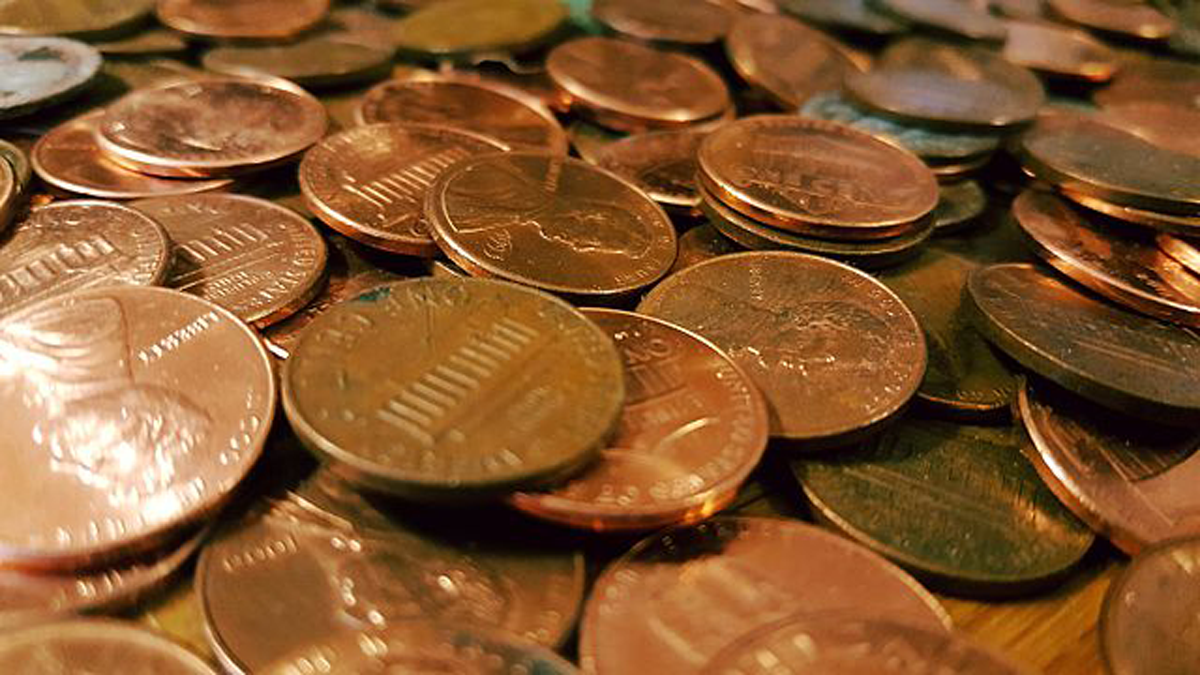

Following over two centuries of circulation, the American penny is slated for discontinuation, concluding a 238-year period in the country’s financial narrative. The last coin is scheduled for production today at the US Mint in Philadelphia, signifying the conclusion of an epoch.
The final minting and reasons for retirement
The last penny will be produced under the supervision of Treasury Secretary Scott Bessent and Treasurer Brandon Beach, following a directive from President Donald Trump earlier this year to halt production. The decision stems from the rising cost of manufacturing the coin—nearly four cents per penny—making it more expensive to produce than its actual value. Once an essential part of everyday life, used for small purchases like gumballs, parking meters, or tolls, the penny has gradually become less relevant, often accumulating in coin jars, drawers, or “leave a penny/take a penny” trays.
The one-cent piece persisted for over 150 years longer than the half-penny, leaving only higher value coins like the nickel, dime, quarter, and the infrequently utilized half-dollar and dollar coins in active circulation. Even though its manufacturing has ceased, the penny will continue to be recognized as legal currency, thus maintaining its role in transactions should individuals choose to employ it.
Challenges following the penny’s exit
Despite its expected discontinuation, this change has already presented difficulties for both vendors and shoppers. Numerous businesses are now compelled to adjust cash payments to the closest five-cent increment, frequently increasing the total by one or two cents. Other establishments are prompting patrons to provide one-cent coins to facilitate transactions. Nevertheless, in some jurisdictions, adjusting prices in this manner could lead to legal complications, rendering the transition more intricate than initially foreseen.
Ironically, although eliminating the penny might lead to financial savings, the potential necessity of manufacturing a greater quantity of nickels—which are more expensive to produce than pennies—could negate these benefits. Both businesses and governmental bodies are currently navigating a period of instability. Mark Weller, who serves as the executive director of Americans for Common Cents, states, “By the time we reach Christmas, the problems will be more pronounced with retailers not having pennies.” Weller highlights that nations such as Canada, Australia, and Switzerland implemented well-defined strategies when removing low-value coinage, whereas the United States has merely issued a concise declaration, leaving much of the practical adjustments to be handled by enterprises themselves.
Rounding practices and their implications
Different companies are exploring various rounding methods. Kwik Trip, a chain of convenience stores located in the Midwest, has opted to round down cash transactions when pennies are not available, to prevent customers from being overcharged. This method, however, incurs a financial burden. Given millions of cash transactions annually, the chain projects that this rounding policy could result in losses of several million dollars per year.
On a broader scale, the Federal Reserve Bank of Richmond estimates that rounding transactions to the nearest nickel could collectively cost American consumers about $6 million per year—roughly five cents per household. While this figure is relatively modest, rounding cannot be implemented uniformly nationwide due to differing state regulations. States like Delaware, Connecticut, Michigan, and Oregon, along with cities such as New York, Philadelphia, and Washington, D.C., require exact change in certain transactions. In addition, federal programs such as SNAP mandate precise pricing to ensure fairness for beneficiaries using debit cards. Retailers rounding down cash transactions in these contexts could face legal challenges or penalties.
Industry associations, such as the National Association of Convenience Stores (NACS), have pressed Congress to pass laws that simplify and enable rounding procedures. Jeff Lenard, a representative for NACS, stressed, “We urgently require legislation that permits rounding, enabling retailers to provide change to these patrons.” Until these regulations are put into effect, the elimination of the penny creates both operational and legal ambiguities for numerous enterprises.
A coin with a rich past
The penny boasts a storied past, initially produced in 1787, predating the United States Mint’s creation by six years. Benjamin Franklin is largely recognized for conceptualizing the Fugio cent, the country’s inaugural penny. Its present appearance, showcasing Abraham Lincoln, was introduced in 1909 to mark the hundredth anniversary of Lincoln’s birth, making it the first American coin to feature a president.
Over time, however, the penny has seen a steady decline in practical use and cultural significance. The Treasury Department estimates that approximately 114 billion pennies remain in circulation, yet many are underutilized, tucked away in jars or collected as keepsakes rather than used in transactions. Public reaction to the coin’s discontinuation has been muted, reflecting its diminished role in everyday commerce.
Despite its diminishing practical use, the one-cent coin holds a special place in the hearts of many Americans. Joe Ditler, a 74-year-old author residing in Colorado, reminisces about his childhood, when he would use pennies for arcade games or flatten them on train tracks. Currently, he mostly uses them infrequently for cash purchases or contributes them to tip jars. He muses, “They evoke memories that have remained with me throughout my entire life. The penny has enjoyed a remarkable existence. However, it’s likely time for its discontinuation.”
Legacy and cultural impact
The retirement of the penny marks more than just the end of a physical coin—it represents a shift in how Americans interact with money. What was once a practical tool for small purchases has become largely symbolic, embedded in family traditions, historical memory, and American culture. Collectors and enthusiasts are likely to preserve the final minted coins, ensuring that the penny’s legacy endures in some form, even as it exits everyday circulation.
While challenges remain for businesses and consumers adapting to its absence, the phase-out is also a reflection of broader economic realities. Rising production costs, changing consumer habits, and the prevalence of digital payments have collectively diminished the necessity of the one-cent coin. As society transitions toward a more digital and rounded approach to cash transactions, the penny’s symbolic role may outlive its practical utility.
The American penny’s departure closes a remarkable chapter in the nation’s monetary history. Its 238-year journey, from Benjamin Franklin’s Fugio cent to the familiar Lincoln penny, highlights both the evolution of U.S. currency and the changing ways Americans interact with money. While its practical use may end, the memory of the penny—its cultural and historical significance—will remain a lasting testament to a bygone era.