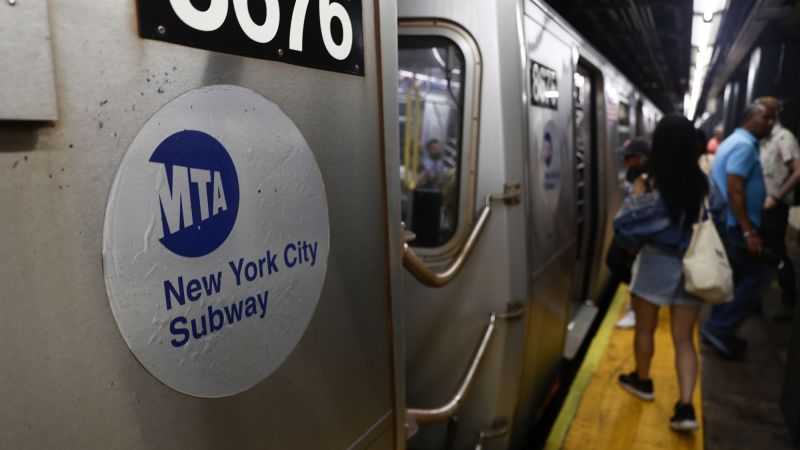

The Metropolitan Transportation Authority (MTA) in New York City has partnered with Google for a groundbreaking pilot program focused on enhancing the reliability of its old subway network. Utilizing Google’s mobile technology, the effort aims to detect and resolve rail problems before they cause service interruptions. Named “TrackInspect,” the project signifies a considerable advancement in applying artificial intelligence and contemporary technology to public transportation.
Beginning in September 2024 and wrapping up in January 2025, the pilot project involved equipping certain subway cars with Google Pixel smartphones. These phones were responsible for gathering sound and vibration information to identify possible track issues. This data was subsequently evaluated by Google’s AI systems in the cloud, which identified zones that needed further examination by MTA staff.
“By spotting initial indicators of track deterioration, we not only cut down on maintenance expenses but also lessen inconveniences for passengers,” stated Demetrius Crichlow, president of New York City Transit, in an announcement made public in late February.
The collaboration between the MTA and Google forms part of a wider initiative to update New York’s 120-year-old subway network, which still struggles with issues tied to its outdated infrastructure and regular delays. Although the pilot program showed encouraging outcomes, uncertainties persist regarding the potential expansion of TrackInspect due to the MTA’s budgetary limitations.
The MTA’s partnership with Google is part of a broader effort to modernize New York’s 120-year-old subway system, which continues to face challenges related to aging infrastructure and frequent delays. While the pilot program demonstrated promising results, questions remain about whether TrackInspect will be expanded given the financial constraints facing the MTA.
Subway delays continue to be a constant issue for those traveling in New York City. Towards the end of 2024, the MTA documented tens of thousands of delays monthly, with numbers surpassing 40,000 in just December. These interruptions stem from numerous causes, such as track flaws, construction activities, and shortages of crew members.
Subway delays are a persistent problem for New York City commuters. In late 2024, the MTA reported tens of thousands of delays each month, with figures exceeding 40,000 in December alone. These disruptions are caused by a variety of factors, including track defects, construction, and crew shortages.
The TrackInspect program aims to address one critical aspect of the issue: identifying and resolving mechanical problems before they escalate. During the pilot, six Google Pixel smartphones were installed on four R46 subway cars, which are known for their distinctive orange and yellow seats. The devices recorded 335 million sensor readings, over one million GPS data points, and 1,200 hours of audio.
Rob Sarno, serving as an assistant chief track officer for the MTA, was integral to the project. His duties involved examining audio clips that the AI system flagged for potential track issues. “The system pinpoints zones with unusual decibel levels, possibly signaling loose joints, damaged rails, or other defects,” Sarno elaborated.
La línea de tren A, seleccionada para el piloto, presentó un entorno de prueba variado con vías tanto subterráneas como elevadas. Además, incluyó segmentos de infraestructura recientemente construida, ofreciendo un punto de referencia para comparaciones. Aunque no todos los retrasos en la línea A se deben a problemas mecánicos, los datos recopilados durante el programa piloto podrían contribuir a resolver problemas recurrentes y mejorar el servicio en general.
Encouraging outcomes, yet challenges persist
El programa TrackInspect produjo resultados alentadores, con el sistema de inteligencia artificial detectando con éxito el 92% de los lugares con defectos que fueron verificados por los inspectores de la MTA. Sarno calculó que su tasa de éxito personal al prever defectos en las vías basándose en datos de audio fue de aproximadamente un 80%.
The TrackInspect program yielded encouraging results, with the AI system successfully identifying 92% of defect locations verified by MTA inspectors. Sarno estimated his personal success rate in predicting track defects based on audio data at around 80%.
Despite its achievements, the pilot program brings up questions concerning its scalability and expenses. The MTA has not revealed the potential cost of deploying TrackInspect throughout its entire subway network, which comprises 472 stations and accommodates over one billion riders each year. The agency is also facing financial difficulties, requiring billions of dollars to finish ongoing infrastructure projects.
Despite its success, the pilot program raises questions about scalability and cost. The MTA has not disclosed how much it would cost to implement TrackInspect across its entire subway system, which includes 472 stations and serves over one billion riders annually. The agency is already grappling with financial challenges, needing billions of dollars to complete existing infrastructure projects.
An increasing trend in transit advancement
New York’s collaboration with Google is part of a wider movement where cities around the globe are utilizing artificial intelligence and smart technologies to enhance public transit systems. For instance, New Jersey Transit has employed AI to study passenger flow and manage crowds, while the Chicago Transit Authority has established AI-based security systems to identify weapons. In Beijing, facial recognition technology has been adopted as an alternative to conventional transit tickets, minimizing wait times during busy hours.
New York’s partnership with Google is part of a broader trend in which cities worldwide are adopting artificial intelligence and smart technologies to improve public transit systems. For example, New Jersey Transit has used AI to analyze passenger flow and crowd management, while the Chicago Transit Authority has implemented AI-driven security measures to detect weapons. In Beijing, facial recognition technology has been introduced as an alternative to traditional transit tickets, reducing wait times during peak hours.
La red de metro de la MTA es la más grande de Estados Unidos, brindando servicio las 24 horas en muchas de sus líneas. Este funcionamiento continuo añade otra capa de complejidad a los esfuerzos de mantenimiento, ya que las reparaciones y mejoras a menudo deben realizarse junto al servicio activo. Con el uso de tecnología de inteligencia artificial y teléfonos inteligentes, el programa TrackInspect podría ayudar a la MTA a enfrentar estos desafíos de manera más eficiente.
Future Prospects
Looking ahead
Por el momento, el piloto simboliza un paso esperanzador hacia la modernización de las operaciones de la MTA y la resolución de los desafíos de un sistema de tránsito envejecido. Al combinar el conocimiento de empresas tecnológicas como Google con la experiencia de los profesionales del transporte, la ciudad de Nueva York podría ofrecer una experiencia de metro más confiable para sus millones de pasajeros diarios.
Mientras Sarno reflexiona sobre el proyecto, destaca el potencial de las soluciones impulsadas por inteligencia artificial para transformar el transporte público. “Esta tecnología nos permite identificar problemas con anticipación, reaccionar más rápido y, en última instancia, ofrecer un mejor servicio a nuestros clientes,” afirmó.
As Sarno reflects on the project, he emphasizes the potential of AI-driven solutions to transform public transportation. “This technology allows us to detect problems earlier, respond faster, and ultimately provide better service to our customers,” he said.
The MTA’s collaboration with Google underscores the potential of public-private partnerships to drive innovation in critical infrastructure. Whether TrackInspect becomes a permanent fixture in New York’s subway system remains to be seen, but its success highlights the possibilities of integrating cutting-edge technology into the daily lives of commuters.