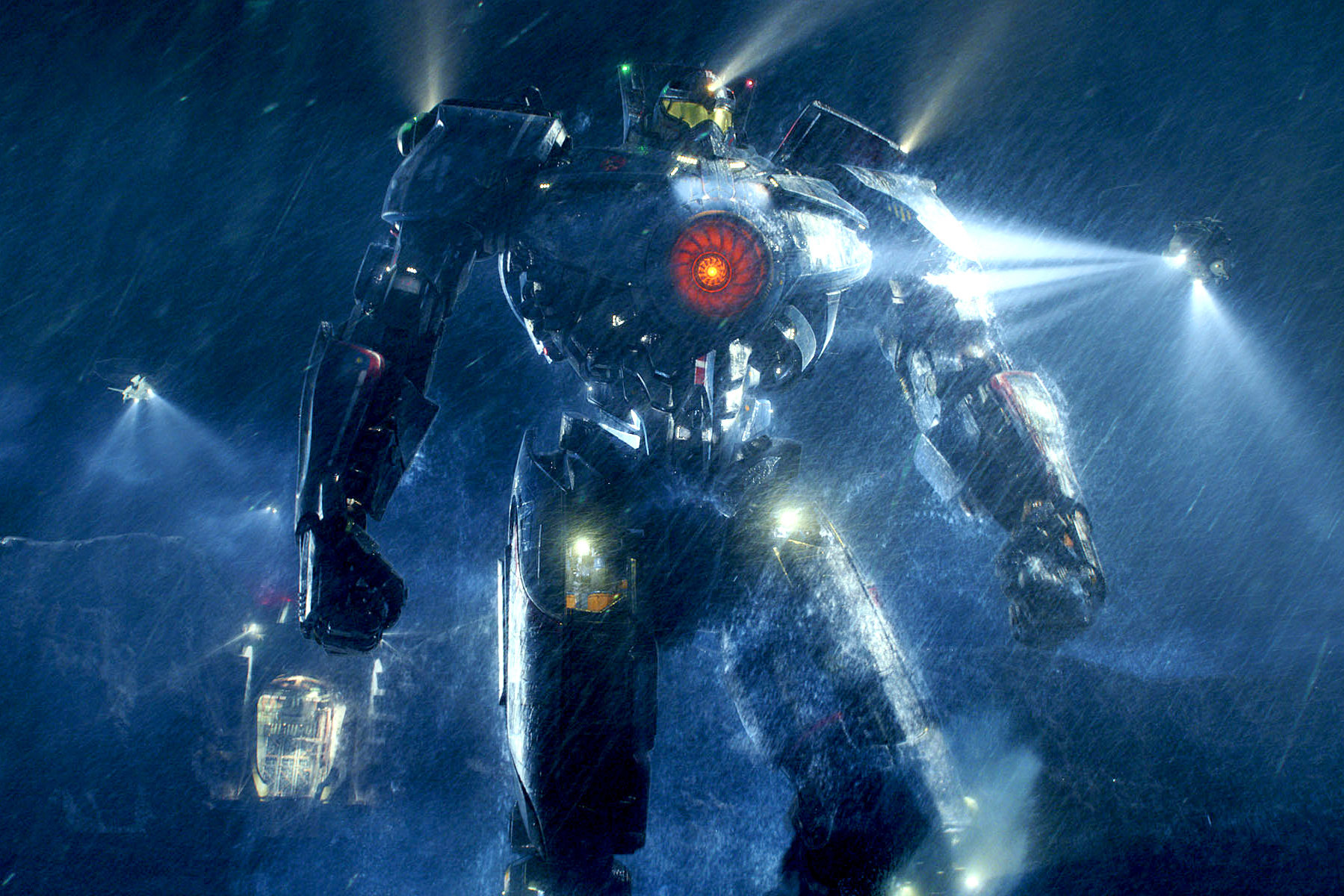

The realms of science fiction and action have consistently presented narratives featuring colossal creatures, unlikely heroes, and the human race’s battle against overwhelming challenges. By 2013, viewers were well-acquainted with Japanese kaiju cinema, exemplified by Godzilla, and Hollywood’s fondness for grand-scale devastation, seen in movies like “Independence Day” and “Transformers.” Nevertheless, ‘Pacific Rim’, under the direction of Guillermo del Toro, successfully forged its own distinct character, even while openly referencing these established genres.
Rich Visual World-Building and Design
One of the film’s most defining qualities is its world-building. Del Toro and his creative team invested significant energy into crafting a believable near-future Earth overrun by breaches in the Pacific that allow monstrous kaiju to invade. What sets this film apart is not just the sheer size of its robotic protagonists, known as Jaegers, or the monstrous grandeur of the kaiju, but the intricate design philosophy behind them. Jaegers like Gipsy Danger and Striker Eureka are distinctly characterized, blending mechanical realism with unique personalities reflected in their national origins and pilot backstories.
Moreover, the kaiju transcend mere brute creatures; each possesses a distinct identity, complete with a designation, unique abilities, and even strategic objectives, thereby crafting an unforgettable collection of adversaries. The production design group drew from a broad spectrum of influences, encompassing everything from classic monster cinema to modern anime, yet seamlessly integrated these elements into a visual style that felt entirely native to the film’s world.
Emotional Stakes Elevated Through Synchronicity
Central to the film’s storytelling ingenuity is the notion of Drift compatibility. Diverging from the solitary hero archetypes prevalent in Western blockbusters, “Pacific Rim” presents a neural link system that mandates two pilots to jointly control a Jaeger. This idea transforms combat into a profoundly psychological and emotional journey, where physical skill must be complemented by emotional alignment. The Drift forces characters to confront past wounds, fragility, and mutual reliance, elevating action scenes from mere visual displays to insights into human bonds.
Case studies derived from both fan and critical reception underscore the profound impact this particular mechanism had on its audience. For instance, the collaborative dynamic between Mako Mori and Raleigh Becket sparked considerable fan involvement, fueling widespread conversations across various online platforms and giving rise to the “Mako Mori Test” as a distinct metric for evaluating female character autonomy in cinema, offering an alternative to the Bechdel Test.
Challenging Conventional Genre Tropes
While numerous colossal creature features often celebrate military valor or patriotic fervor, “Pacific Rim” embraces a global outlook. The Pan Pacific Defense Corps functions as a worldwide alliance, not solely an American rescue operation, featuring Jaegers and their operators originating from Australia, China, Russia, and Japan, in addition to the United States. This diverse cultural representation is also reflected in the film’s cast and storytelling, with Rinko Kikuchi’s Mako Mori developing into a central figure whose journey is just as crucial as those of her male colleagues.
Guillermo Del Toro himself, in interviews, emphasized the importance of depicting cooperation over conflict, underscoring the necessity of unity in the face of existential threat. The visual language of the film, from the multicolored Jaegers to the dynamic cityscapes under siege, reinforces this ethos of collaborative strength.
Practical Effects and Innovative Cinematography
Another aspect elevating “Pacific Rim” is its approach to visual effects. In a landscape dominated by often weightless CGI, Del Toro insisted on volumetric realism: Jaegers move with a sense of mass and inertia, while their impacts on urban environments are meticulously rendered. This is achieved through a blend of computer-generated imagery and extensive use of practical effects for cockpit sequences. Pilot actors physically endure simulated impacts, intense strobe lighting, and real water, amplifying believability and audience immersion.
The film’s use of color is equally revolutionary. Borrowing from anime conventions, each scene employs saturated blues, oranges, and neons, defiantly breaking with the desaturated palettes seen in contemporary blockbusters. Critics praised this visual boldness as both a love letter to genre tropes and a fresh reinterpretation.
Music and Sound: Forging an Aural Persona
Ramin Djawadi’s score for “Pacific Rim” deserves special mention. Eschewing the generic orchestral swells typical of Hollywood action scenes, Djawadi constructed a soundscape that blends electric guitars, traditional orchestration, and industrial elements. The resulting musical motifs, particularly for Jaeger marches and kaiju battles, achieve a heroic yet industrial tone, intensifying the stakes and giving auditory identity to the film’s colossal machines.
Sound design further punctuates the sense of enormity, using deep, resonant roars and metallic clashes that distinguish each kaiju and Jaeger. This contributed to sensory immersion that critics likened to actually “feeling” the weight of the battles.
Metatextual Tribute and Genre Awareness
Guillermo del Toro conceived of “Pacific Rim” as more than just a superficial spectacle; he envisioned it as a metatextual tribute to the cinematic and animated traditions that shaped his artistic vision. The movie openly displays its inspirations, incorporating elements from mecha anime like “Neon Genesis Evangelion” and “Gundam,” alongside homages to classic monster films such as “Godzilla” and “Ultraman.” However, it transcends mere imitation by skillfully blending these diverse components into innovative storytelling structures and breathtaking visual displays.
Analysts note how the film’s opening overture, eschewing a slow build-up for immediate world-shattering action, reflects a keen awareness of modern audience expectations, updating kaiju mythos for a new century without losing the emotional and thematic core.
Lasting Cultural Impact
Despite its varied performance at the North American box office, “Pacific Rim” achieved considerable international success, particularly captivating audiences in regions like China and Japan. The film’s extensive merchandising potential led to the creation of toys, comic books, novels, and even an animated series on Netflix, showcasing its remarkable ability to inspire diverse forms of storytelling across different media.
Academically, the movie sparked new conversations about genre blending, worldwide film creation, and depictions of trauma, with numerous articles exploring its innovative method for character interactions and collaborative efforts.
“Pacific Rim” stands out in its genre by blending reverence for kaiju and mecha tradition with inventive storytelling, emotional depth, and a resplendent audiovisual palette. It reshaped old icons into modern myths, elevating both the spectacle and the soul of the genre. By positioning unity, empathy, and imaginative world-building at its core, “Pacific Rim” expanded the possibilities of what a giant monster film could mean and accomplish for global audiences.